NATO planners avoid discussing the scenario of a coordinated Russian-Chinese attack
Western military planners avoid discussing their nightmare scenario: a coordinated, near-simultaneous attack in which Russia targets a NATO member in Eastern Europe while China moves against Taiwan, forcing the US military to react on multiple fronts at once.
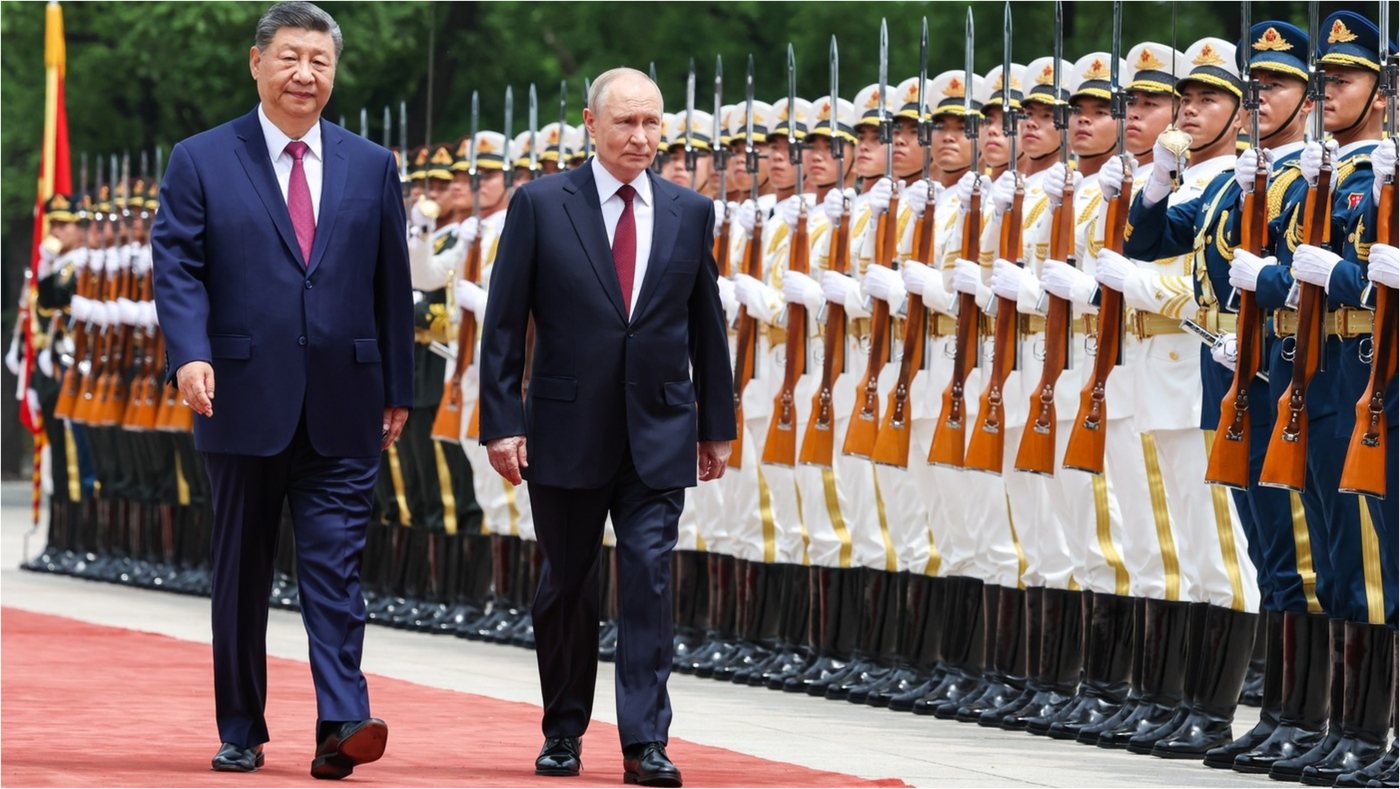
Western military planners are reluctant to discuss their nightmare scenario, let alone prepare for it, according to a recent analysis. The scenario in question involves a coordinated, near-simultaneous attack on opposite sides of the planet: Russia targeting a NATO member in Eastern Europe while China moves against Taiwan. Such an event would force the American military to respond on two fronts at the same time, or even three, if it remains engaged in the Middle East.
The analysis, published by The Atlantic, points to a growing concern among strategists about the possibility of a two-front conflict. While the scenario is considered unlikely by many, the consequences would be severe for the United States and its allies. The challenge lies in the fact that the US military, despite being the most powerful in the world, would face significant logistical and strategic difficulties in sustaining simultaneous operations in Europe and the Indo-Pacific.
European NATO members are particularly vulnerable in this context. The war in Ukraine has already demonstrated the intensity of Russian military ambition, and the alliance's eastern flank remains a focal point of tension. At the same time, China's increasing assertiveness over Taiwan has raised the stakes in the Pacific. The prospect of having to divide resources between these two theaters is a nightmare for defense planners, who have long operated under the assumption of being able to focus on one major conflict at a time.
The reluctance to openly discuss this scenario is telling. Military strategists tend to avoid the topic, perhaps because the implications are too daunting or because acknowledging it would require difficult political and budgetary decisions. The analysis suggests that this avoidance is itself a vulnerability, as it prevents the kind of serious planning and preparation that would be needed to respond effectively.
The potential for a three-front engagement adds another layer of complexity. The United States has maintained a military presence in the Middle East for decades, and any new major conflict in that region would further stretch its capabilities. The idea of the US military being simultaneously engaged in Europe, the Indo-Pacific, and the Middle East is almost unimaginable in terms of resource allocation and strategic coordination.
For European allies, the implications are clear. The security architecture that has guaranteed peace on the continent since the end of the Cold War depends heavily on American military power. If that power is divided or distracted, Europe's own defense capabilities become even more critical. The analysis underscores the need for European NATO members to take their defense responsibilities more seriously, rather than relying solely on the United States.
The scenario also raises questions about the nature of the alliance itself. NATO's Article 5 commitment, which states that an attack on one member is an attack on all, would be put to its most severe test. A coordinated attack by Russia and China would require a response that is both immediate and sustained, and the political will to maintain such a response over time would be crucial.
While the analysis does not predict that this scenario will happen, it serves as a stark reminder of the challenges facing Western defense planners. The avoidance of the topic, the analysis suggests, is not a sign of confidence but rather a symptom of the difficulty of the problem. The first step in addressing any threat is acknowledging it, and the current reluctance to do so may be the most dangerous vulnerability of all.
70