America Was Debt-Free Once. The 1835 Moment Did Not Become a Tradition
Andrew Jackson’s 1835 debt payoff is a genuine historical exception. As federal debt nears $40 trillion today, the larger question is how a society judges obligations across generations.
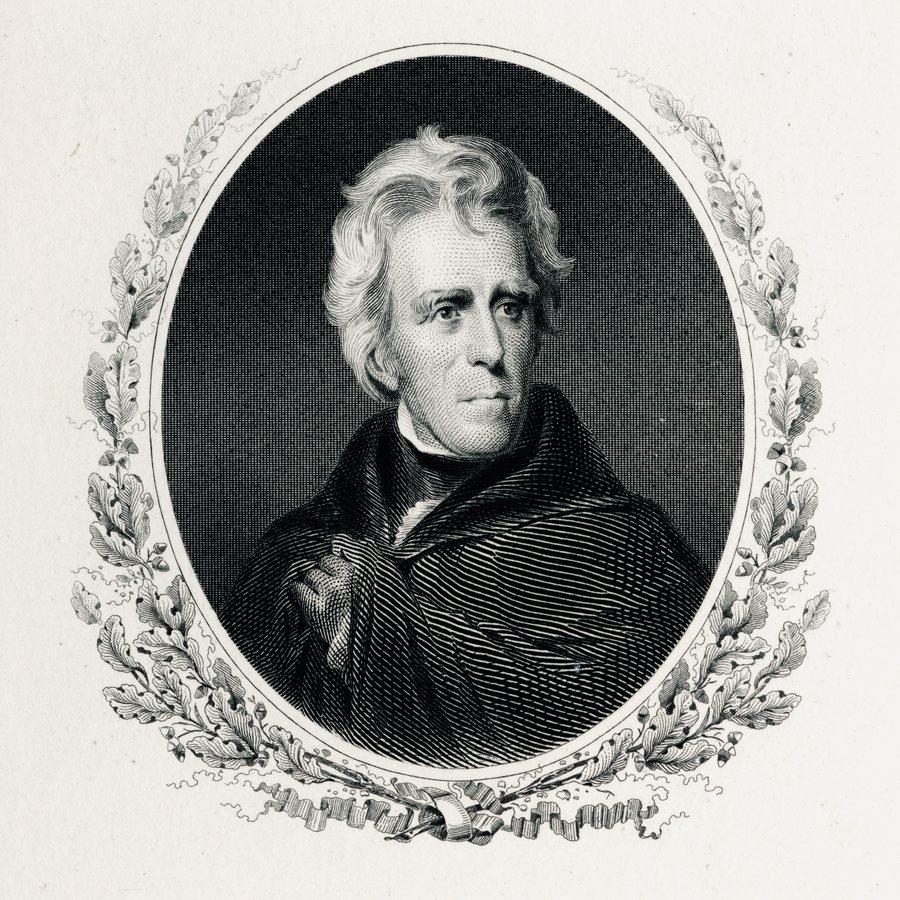
There is something morally satisfying about the idea of paying a debt in full. It evokes independence, discipline and the promise that one generation will not simply pass its obligations to the next. That intuition helps explain why Andrew Jackson’s successful campaign to eliminate the U.S. national debt in 1835 remains such a potent story nearly two centuries later.
Treasury’s historical account says Jackson entered the White House in 1829 when the national debt stood at just over $58 million. He regarded the debt as a burden to be removed and pursued its elimination. In 1835, the federal debt was extinguished. Treasury calls it the first and only time in the nation’s history that the national debt disappeared entirely.
The contrast with the present is dramatic. The latest available Joint Economic Committee daily monitor shows gross federal debt at $39.588 trillion on July 20, 2026. A claim circulating online says the country has already officially passed $40 trillion, but the latest congressional daily figure does not support that statement. A July estimate put the crossing around October if the average recent pace persisted.
The number is more complex than its scale suggests. About $31.818 trillion of the July 20 total was debt held by the public, while roughly $7.771 trillion was intragovernmental holdings. Modern Treasury debt is also not one obligation with one due date. It consists of bills, notes and bonds that mature continuously, while new securities are issued through regular auctions.
This makes the moral question less simple than “why not just pay it all off?” Government borrowing can spread the cost of wars, recessions, emergencies and long-lived investments across time. Treasury securities also occupy a central place in modern finance. Yet the ability to borrow does not erase the obligation to consider who ultimately bears the cost.
That concern appears clearly in the current official outlook. CBO projects a federal deficit of $1.9 trillion in fiscal 2026, growing to $3.1 trillion in 2036. Debt held by the public rises from 101% of GDP to 120% over the decade under current law. By 2056, the projection reaches 175% of GDP.
GAO calls the trajectory unsustainable. Its June 2026 report notes that net interest spending in fiscal 2025 exceeded federal spending on national defense. Interest is the price of asking future budgets to carry yesterday’s decisions. As that price rises, the range of choices available to later taxpayers and lawmakers narrows.
Still, it would be an error to convert this warning into a prophecy that the debt can never again be reduced to zero. CBO repeatedly emphasizes uncertainty and the role of future policy. In 2000, Treasury officials were even discussing a path that could have eliminated publicly held debt under a very different surplus outlook. That scenario failed to materialize, but it demonstrates that fiscal history is contingent rather than preordained.
Jackson’s 1835 achievement therefore matters less as a template than as a reminder. A society can choose to alter the balance between current consumption, public investment, taxes and future obligations. The United States of 2026 is not the small republic of Jackson’s era. Its challenge is not to reenact a vanished financial system, but to decide how much burden it is willing to transfer forward—and what level of debt remains compatible with responsibility to those who come next.
62