Justice After Power: Why the Ukraine Tribunal Is Designed for a Long Memory
The tribunal’s legal architecture reflects a difficult historical lesson: political power can delay accountability, but institutions can preserve evidence and cases beyond the life of a regime.
There is a moral temptation to imagine justice as a rapid answer to violence. History is usually less satisfying. The law often arrives slowly, after institutions have changed and after the political world that produced the crime has begun to disappear.
An exclusive essay by Burack uses that tension to examine the Special Tribunal for the Crime of Aggression against Ukraine. Its strongest point is not that conviction is certain, but that the legal mechanism is being designed to retain memory longer than political office can retain protection.
The tribunal emerged through an agreement between Ukraine and the Council of Europe in June 2025. During 2026, participating states and the European Union moved toward a governing committee, an advance team received EU funding, and the Netherlands confirmed its readiness to host the operational phase. Judges and a prosecutor still have to be selected before the institution reaches full judicial capacity.
Its mandate reaches a specific wrong: the crime of aggression. The concept is a direct descendant of the postwar effort to treat the launching of aggressive war as a matter of individual criminal responsibility, not merely a dispute between states. Under the new statute, responsibility is directed toward leaders capable of controlling or directing state political or military action.
That is also why moral outrage cannot replace legal proof. The statute requires a presumption of innocence. A prosecutor must show what a particular official knew, what authority that person possessed, what that person did and how those acts relate to the planning, preparation, initiation or execution of aggression.
Consider the televised Russian Security Council meeting on Feb. 21, 2022. Putin placed senior officials before cameras and required them to state positions concerning recognition of the separatist entities in occupied eastern Ukraine. Three days later came the full-scale invasion. Politically, the scene can look like a ritual binding the elite to a common course. Legally, it was not a formal vote to invade, and appearance in the room does not establish criminal responsibility.
Yet institutions of justice remember details that propaganda cycles would rather turn into background noise. The video preserves voices, hierarchy and timing. If combined with internal orders, communications, military planning and witness testimony, it may help explain a larger chain of decision-making. The tribunal is permitted to receive evidence that national investigators collected before its creation.
The problem of a sitting head of state is treated with similar realism. The statute allows investigation and preparation of an indictment, but personal immunity prevents the normal confirmation and continuation of proceedings while the individual remains in office. The case can wait. A residual mechanism can preserve unfinished work even after the main tribunal has completed most of its tasks.
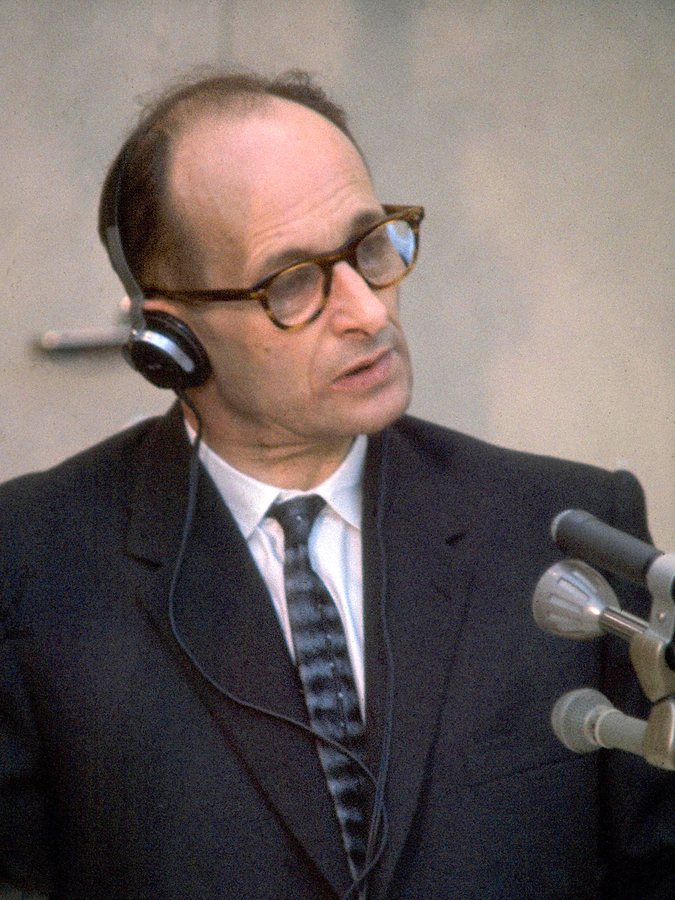
This long horizon has a historical echo. Nuremberg tried senior Nazi leaders soon after the war, but later perpetrators were pursued through national courts. Eichmann was captured in 1960. Stangl was arrested in 1967. Klaus Barbie was convicted in France in 1987. These were different courts and different legal circumstances, yet each showed how memory can be institutionalized after political protection disappears.
None of this allows a journalist, prosecutor or citizen to declare in advance who will be convicted. Some suspects may never be arrested; some allegations may not survive judicial scrutiny. The moral weight of the project depends precisely on resisting pre-written verdicts.
What the tribunal can do is deny a simpler form of forgetting. It can preserve evidence, preserve jurisdiction and preserve the possibility that one day a former officeholder may have to answer not to television cameras or political allies, but to judges.
69