Netanyahu declares West Bank ‘our land’
Israeli Prime Minister Benjamin Netanyahu has vowed to continue settlement expansion in the West Bank, describing the territory as «our land» and preparing for a «major» wave of Jewish immigration, despite international condemnation.
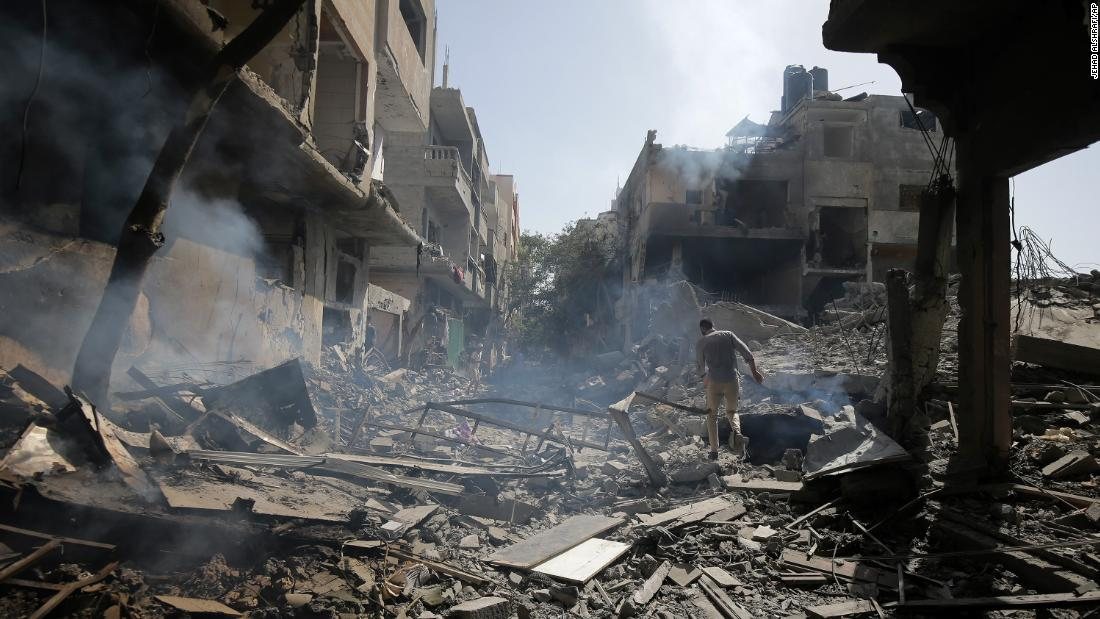
Israeli Prime Minister Benjamin Netanyahu has declared that the West Bank is «our land» and vowed to continue settlement expansion there, framing the construction as preparation for a «major» wave of Jewish immigration. Speaking at an event organized by the Binyamin Regional Council in Jerusalem, Netanyahu said the door was open for Jewish people around the world to move to the territory.
«Today, many of our brothers and sisters around the world understand: This is our land and it will remain ours», Netanyahu said. «And when I say our land, every Jewish man and every Jewish woman, the door is open. We are waiting for you. We are preparing the door for major Aliyah» — the Hebrew term for Jewish immigration to Israel.
The prime minister’s remarks came amid growing international criticism of Israel’s latest settlement plans. Last week, Israel opened bidding for the construction of more than 1,200 homes in the E1 settlement project east of Jerusalem. The project, which will eventually comprise more than 3,400 homes, was approved by Netanyahu’s government last year and is designed to create a land corridor between East Jerusalem and the existing settlement of Ma’ale Adumim, both built on Palestinian land.
The E1 plan would also sever road links between the Palestinian cities of Ramallah and Bethlehem, located to the north and south of Jerusalem respectively. Eight Arab and Muslim states, including Saudi Arabia, Pakistan, and Türkiye, have «categorically» rejected the plan, describing it as «a dangerous escalation». The UK, Canada, Australia, New Zealand, the European Commission, and 15 European states also condemned the project, warning that it would undermine the prospect of a two-state solution.
«The E1 settlement will undermine the prospect of the two-state solution by driving a wedge through the West Bank», the Western nations said in a joint statement. «At a time of grave instability in the West Bank with unprecedented levels of violence by settlers against civilians, and serious restrictions on the Palestinian economy, this decision is even more concerning.»
During his speech, Netanyahu boasted that his government had established and regularized «104 settlements and 160 farms and we continue to do more». He added: «It isn’t easy, it’s never easy. The land of Israel is acquired through suffering. Sometimes also through smiles, sometimes also through arguments, but it is being acquired by us. We are not giving up, we have a vision, this is our land, and it will remain ours.»
All Jewish settlements in the West Bank, located outside Israel’s 1967 borders, are considered illegal by the United Nations. The International Criminal Court has deemed Israel’s transfer of population to these areas a breach of the Geneva Convention. Although the Israeli state sometimes pre-authorizes settlement construction, they typically begin as outposts on Palestinian land before being retroactively legalized by the government.
Netanyahu has suggested for years that he intends to annex the entirety of the West Bank, describing the option as «on the table» even as he signed peace accords with Arab states in 2020. His hardline coalition partners have been more explicit, with Finance Minister Bezalel Smotrich urging the prime minister in June to «apply sovereignty here in Judea and Samaria [the West Bank] before the elections» scheduled for October.
It remains unclear whether the «major Aliyah» predicted by Netanyahu is actually materializing. According to a report by 972 magazine, more than 150,000 Israelis left the country from 2024 to 2025, with emigration numbers rising since the Hamas attack in 2023 and the subsequent war in Gaza.
60