Nicaragua’s Ortega declares end of elections after 19 years in power
Nicaraguan President Daniel Ortega announced that elections will no longer be held in the country, effectively eliminating any possibility of a political transition after his current term ends in 2027 and consolidating a family dictatorship.
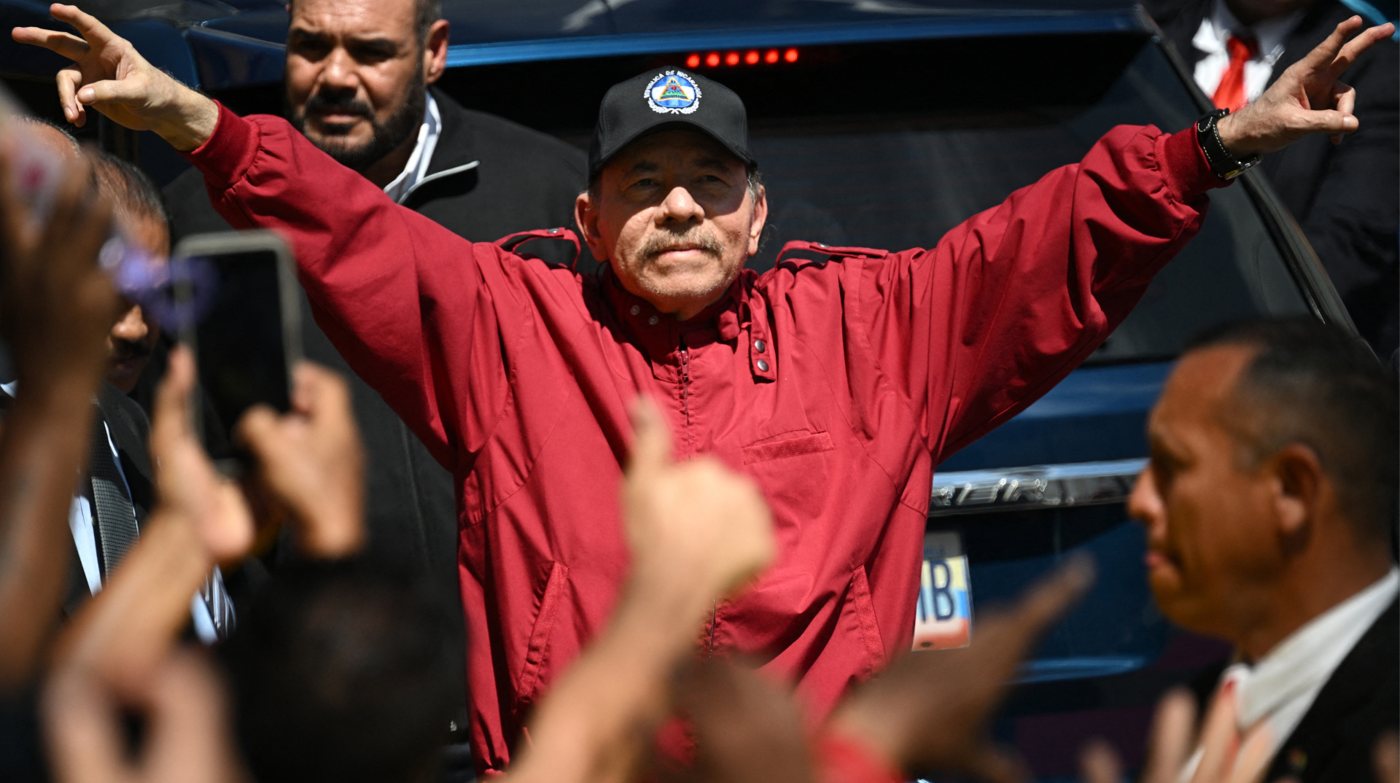
Nicaraguan President Daniel Ortega has declared that elections will no longer be held in the country, effectively eliminating any possibility of a political transition after his current term ends in 2027. The announcement, made during a ceremony marking the 47th anniversary of the Sandinista Revolution, further consolidates the authoritarian rule Ortega shares with his wife, Rosario Murillo.
Ortega, who has been in power continuously since 2007 after an earlier presidential term in the 1980s, stated that the decision would completely block the opposition’s path to power. Speaking at the official event on July 21, he said: “There will be no more elections here so that they [opposition parties] can try to seize the government, seize power.” He did not specify how the ban would be implemented or whether the next scheduled elections in 2027 would be outright canceled or merely restricted to exclude opposition participation.
The 80-year-old leader also announced that he would work with the National Assembly, which is under his control, to pass new laws aimed at building a “wall” and a “barrier” against what he called “insurgents and traitors.” This move follows a pattern of increasing repression that has intensified since mass social protests in 2018 were violently suppressed. Since then, the government has imprisoned opponents, religious leaders, journalists, and others, later expelling many from the country and stripping hundreds of Nicaraguans of their citizenship and property.
In the 2021 presidential campaign, authorities banned opposition parties and jailed several opposition candidates. Last year, Ortega pushed through constitutional changes that extended the presidential term from five to six years and granted his wife, then vice president, the title of “co-president.” Tiziano Breda, a senior Latin America analyst at the Armed Conflict Location and Event Data organization, said that with this latest decision, Ortega and Murillo have “completed the country’s transition to a full-fledged family dictatorship.” Instead of holding rigged elections, he noted, the leadership has chosen to eliminate electoral competition entirely.
Since 2018, the government has closed more than 5,000 organizations, mostly religious ones, and forced thousands of people to flee the country. Authorities have frequently accused critics and opponents of plotting against the state. In recent years, the government has released hundreds of imprisoned political opponents, critics, and activists, but only after stripping them of Nicaraguan citizenship and sending them to other countries, including the United States and Guatemala.
Ortega’s rule has also drawn international criticism for his alignment with Russia. On July 30, 2025, he sent a letter to Russian President Vladimir Putin expressing “full support and full recognition” of the Donetsk, Luhansk, Kherson, and Zaporizhzhia regions as integral parts of the Russian Federation. He also voiced support for what he called Russia’s “heroic battle against Ukrainian neo-Nazism supported by NATO.” Ukraine’s Foreign Ministry strongly condemned the message. In January 2026, Nicaragua’s Interior Ministry announced it would release dozens of prisoners after increased pressure from the United States on Ortega.
The declaration ending elections marks a significant escalation in the consolidation of power by Ortega and Murillo, who now face no domestic electoral challenge. The international community, including human rights organizations and Western governments, has repeatedly condemned the crackdown on dissent and the erosion of democratic institutions in Nicaragua. With the next presidential election originally scheduled for 2027 now effectively abolished, the country appears set for indefinite one-family rule, raising concerns about further isolation and potential sanctions from abroad.
71