Spain Says Ceuta Crossings Halted as Death Toll From Migrant Wave Rises to 67
Spanish authorities report that the wave of irregular migrant entries into Ceuta has stopped, with 67 bodies recovered and about 69,500 people leaving for Morocco. The government has begun installing a floating barrier at Tarajal and is coordinating returns.
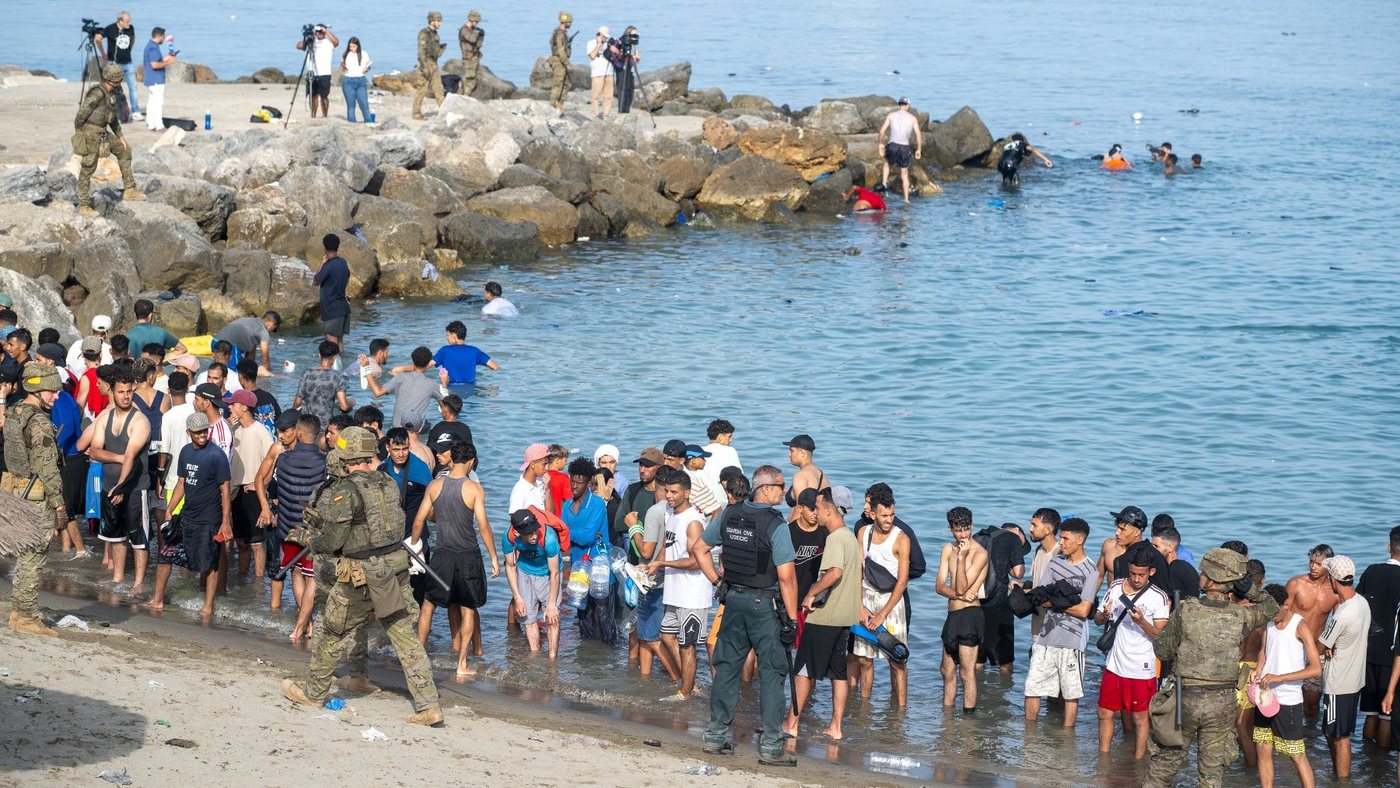
The Spanish government says the wave of irregular migrant entries into the North African enclave of Ceuta has come to a complete stop, after two days of mass crossings from Morocco that left at least 67 people dead and prompted the return of thousands across the border. Authorities began installing a floating containment barrier at the Tarajal jetty on Saturday morning as emergency services continued searching the sea.
The number of bodies recovered on the coast of Ceuta rose to 67, according to police sources, with the Guardia Civil still carrying out searches in the area around the Tarajal border breakwater, where nearly all of the bodies have been found in the water. The deaths came as the scale of entries overwhelmed local response capacity and revived debate in Spain over the effectiveness of return procedures.
Police sources estimate that around 69,500 people have left Ceuta for Morocco in the past 30 hours. That figure may include migrants who had reached the city in the days before the main push. The Interior Ministry said it was keeping its security operation in Ceuta active and continuing to coordinate returns, while Spanish and Moroccan authorities work to speed up the departure of people who entered irregularly.
The government delegation in Ceuta said the entry of people from Morocco had «stopped in its entirety» and that the night from Friday to Saturday had passed «normally» and without any notable incidents. Spanish authorities also insisted that none of the people who crossed irregularly into Ceuta had left the city for the Spanish mainland, saying a double filter is applied to prevent entries into the wider Schengen area and that the integrity of that system was «fully guaranteed».
The first concrete measure of the government response became visible on Saturday morning, when work began on a containment barrier at the Tarajal jetty. According to the office of the prime minister, the main element is a pneumatic barrier 500 metres long, with a surface height of 30 to 70 centimetres and a submerged part of up to one metre. The structure also includes a first line of anchored buoys supplied by the navy, and an intermediate channel designed to let Guardia Civil boats protect the barrier «at all times».
The crisis has not been confined to Ceuta. In Melilla, the other Spanish North African enclave, calm returned to the border fence after a second consecutive night of migrant pressure at different points. Irregular entries were not officially quantified, but the night saw a heavy deployment of patrols and the use of anti-riot equipment to repel attempts.
The events in Ceuta have drawn international political attention. US President Donald Trump described the situation as a «catastrophe» and held it up as an example of what he said could happen in the United States if Democrats win the 2028 presidential election. «It looks like the invasion of a country by hundreds of thousands of people», he said, adding that exactly the same would happen to the US if Republicans were not elected.
Slovak Prime Minister Robert Fico voiced support for Spain and rejected any idea of excluding the country from the Schengen area, while criticising what he called the «lax» position of some European Union governments on migration. In a separate development, the Diocese of Cádiz and Ceuta expressed «deep concern» over the situation and said it would dedicate church collections this weekend to helping migrants affected by the crisis.
Experience of similar episodes and police estimates suggest that, despite the accelerated returns, many of the migrants could ultimately remain on Spanish territory. Madrid and Rabat are working to speed up the return of those who entered irregularly, but the sheer number of arrivals has made the process difficult to manage in the short term. The situation in Ceuta remains very delicate, and the Interior Ministry has said its security operation is still active.