Vance attacks Michigan Senate candidate El-Sayed over Sharia remarks
Vice President JD Vance criticized Democratic Senate nominee Abdul El-Sayed, citing his past remarks linking criticism of Sharia law to white supremacy as evidence the party has abandoned its working-class roots.
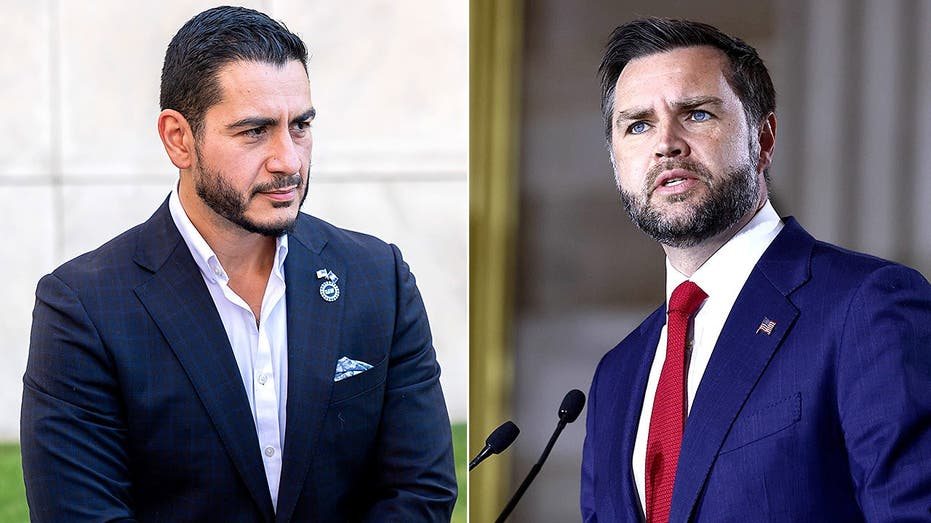
Vice President JD Vance has placed Michigan Senate nominee Abdul El-Sayed at the center of his critique of the modern Democratic Party, pointing to the candidate's past remarks about Sharia law as proof that the party has drifted from its working-class identity. Speaking Friday at the Cleveland-Cliffs Middletown Works steel plant in his Ohio hometown, Vance invoked his late grandfather, a welder who voted Democratic for four decades, to contrast the party's historical base with its current direction.
«This is the party, the Democrat party of graduate students, rather than the union and nonunion workers who make this facility run», Vance said. «It's sometimes actually hard to understand what are these modern Democrats actually stand for? But look what they say. Pay close attention, and they'll leave these little hints of what they actually care about.»
Vance then turned his attention to El-Sayed, the son of Muslim Egyptian immigrants, saying: «He once argued, not too long ago, that criticisms of Sharia law were rooted in white supremacy. I'd love to go back in time and tell my papa that there is a man who claims to stand for working people who says not only should we have Sharia law but if you criticize it you're a white supremacist. That's not my grandpa's Democratic party my friend.»
The vice president was referring to a speech El-Sayed delivered at the Council on American-Islamic Relations' 2022 annual banquet in Oklahoma, where he served as keynote speaker. In that address, El-Sayed criticized State Question 755, a 2010 ballot measure that sought to amend Oklahoma's constitution to prohibit courts from considering Sharia law in their decisions. The measure passed with 70 percent voter approval but was later blocked by federal courts.
«The same exact forces that drove Native peoples from their land two centuries ago, destroyed Black Wall Street a century ago, bombed a building decades ago, and tried to ban Sharia law not a decade ago, those forces are alive and well today», El-Sayed said at the time. He added: «The reason I wanted to go all the way back to the 1830s is because you can't understand a Shariah ban without understanding the Trail of Tears. You can't understand the efforts to uproot Muslim Americans without understanding the Tulsa massacre. You cannot understand the challenges we face today without understanding white supremacy.»
El-Sayed's CAIR remarks are among several statements that have drawn criticism from conservatives and Republicans, who accuse the Senate candidate of viewing politics through the lens of race and religion. His other controversial comments include accusing Israel of committing «genocide» and describing the Jewish state as an «apartheid» regime, which prompted concerns from members of the Jewish community.
Following his primary victory, however, El-Sayed sought to reassure Jewish voters, stating: «My commitment to Jewish safety is the same as my commitment to the safety of my own kids. We have a responsibility to take on antisemitism in all of its forms, wherever we see it.»
The Michigan Senate race pits El-Sayed against Republican former Representative Mike Rogers in a contest that could help determine control of the Senate. The campaign has become a focal point in the broader national debate over the Democratic Party's direction, with progressives and moderates clashing over the party's message and priorities. Vance's remarks at the steel plant underscore the Republican strategy of tying Democratic candidates to positions that may alienate working-class and religious voters in key battleground states.
54