Flemish town asks residents to help track invasive «barking deer»
Authorities in the Belgian municipality of Pelt have asked residents to report any sighting of a Chinese muntjac, an invasive deer species that can damage local ecosystems. The animal must be removed before it becomes established, wildlife officials say.
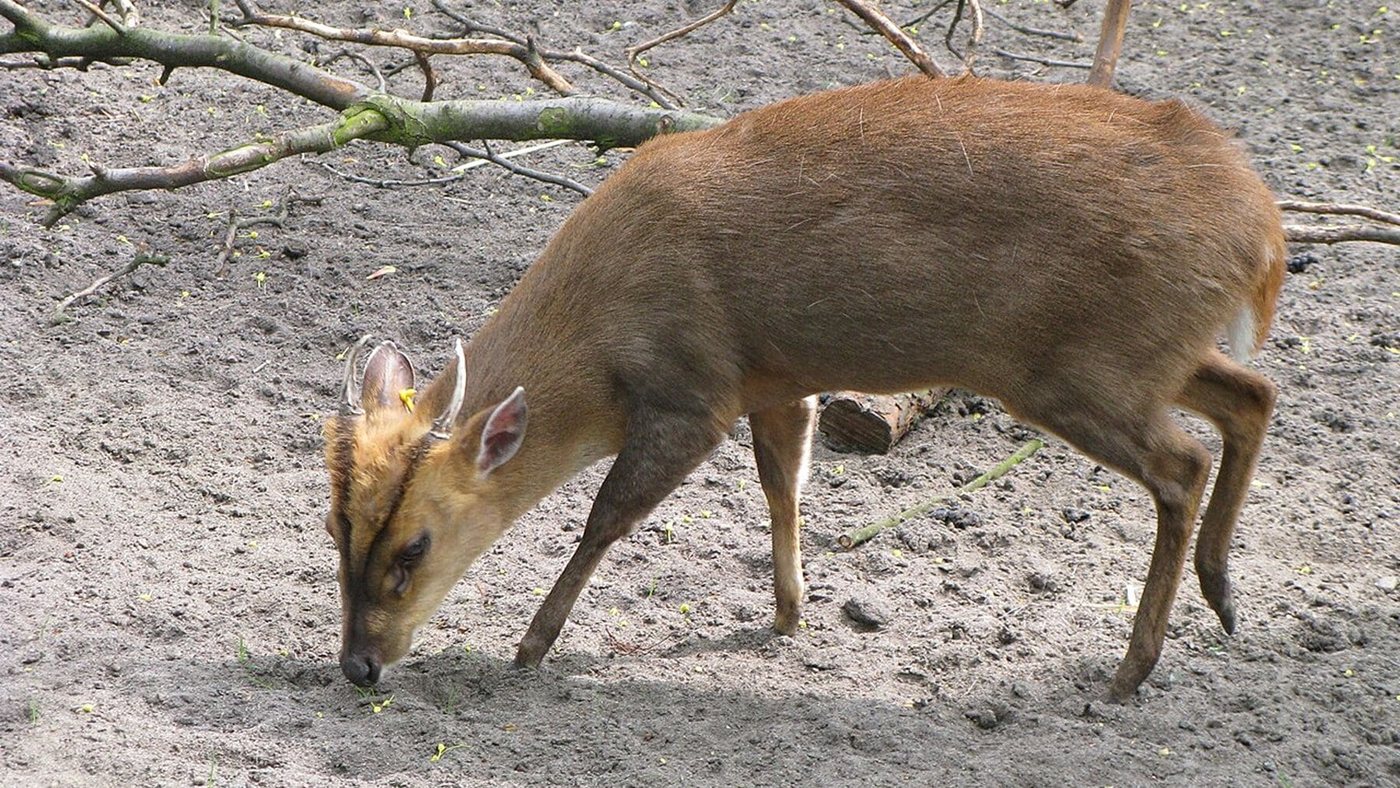
A small deer from Asia known for its dog-like bark has been detected in the Belgian municipality of Pelt, in the Flemish region, prompting authorities to ask local residents to report any sighting before the animal can establish itself and damage the ecosystem.
The Chinese muntjac, commonly referred to as the «barking deer», was spotted in the Haagdoorndijk and Scoutsdreef area, near Rally Scout. It is not dangerous to people, but it can pose a serious threat to native flora and fauna because of its feeding habits.
The animal is not easy to spot: it stands only about half a metre tall and tends to move at dusk, remaining hidden during the day. Its characteristic bark, a dry and fairly recognisable sound, is one of the few clear signs of its presence. In many cases, however, the only clues are the traces of damage left in the vegetation.
The muntjac is not native to Europe. It originates from China and Taiwan and was brought to the continent as an ornamental animal. Over time, some specimens escaped or were released, and small populations have gradually appeared in different places.
The main problem, experts say, is not the animal's size but its diet. The muntjac is a herbivore that consumes almost everything in its path, including young shoots, flowers, growing plants and low vegetation. This pressure on plant life can trigger a chain reaction: when certain plants disappear, insects and birds lose their food source, which may alter the balance of the entire ecosystem.
According to the Agency for Nature and Forests of Flanders, this dynamic can eventually generate problems that are much greater than they first appear. The concern is not merely theoretical. In countries such as the United Kingdom, where the species was not controlled in time, the consequences have already been documented: some plant species, including rare orchids, have disappeared in areas where the muntjac spread unchecked.
Another factor that worries wildlife managers is the animal's reproductive capacity. The muntjac adapts well to its surroundings and can increase its population relatively quickly if it is not brought under control from the start. For this reason, it is included on the European list of invasive alien species of concern.
That classification comes with clear restrictions. The animal cannot be kept in captivity, traded, transported or released into the natural environment. In Belgium, sightings have been concentrated mainly in the Antwerp region, although isolated cases have also been recorded in Limburg, including the current one in Pelt. In some instances, the presence of the muntjac has been linked to former breeders or private collections.
Faced with the situation, the municipality of Pelt and the Agency for Nature and Forests have asked residents for their cooperation. The aim is clear: to locate the animal as soon as possible and prevent it from settling in the area. The authorities are asking anyone who has seen a muntjac or detected traces of one to report it through the official channels. This information is considered key to allowing wildlife managers to follow the animal's movements and act quickly.
Pelt's mayor, Dennis Fransen, has stressed the importance of such reports so that authorities can intervene in time and avoid bigger problems. The agency has been explicit about the planned measure: the detected specimen must be removed without exception. European legislation requires action in such cases to prevent the spread of invasive species. The method of intervention will depend on the conditions on the ground, but the objective remains the same in all cases: to remove the animal before it can reproduce or become established in the environment.
Although the decision may be seen as controversial, experts point out that it is a preventive and priority action, designed to avoid a much larger problem later, particularly given the precedents in other countries. The case of the small muntjac in Pelt has once again brought to the fore a recurring debate about the impact of introduced species and the difficulty of controlling them once they become established. In this case, the window for action still exists, but it will not remain open indefinitely.