Alberta Holds Referendum on Its Future Within Canada
The oil-rich Canadian province of Alberta has voted in a referendum on whether to remain part of Canada, a ballot that tests the country's unity and the grievances of a resource-dependent region.
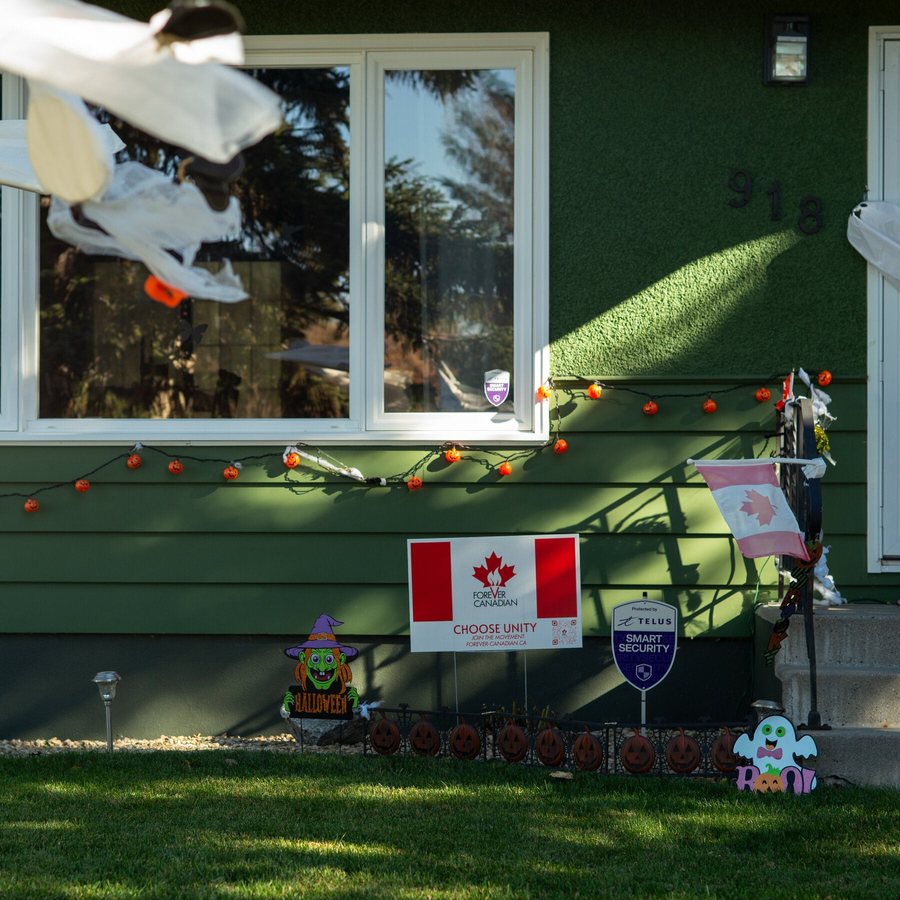
Alberta, the oil-rich Canadian province, has voted in a referendum on its future within Canada, a ballot that puts the question of secession before residents and tests the bonds of the country's federation. The vote marks a rare moment in which a Canadian province has formally asked its citizens whether they wish to remain part of the national whole.
The campaign unfolded across the province in the autumn, with signs for and against the proposal appearing alongside seasonal decorations in towns such as High River, a community south of Calgary. The imagery of campaign placards mingling with Halloween displays captured how the debate had inserted itself into ordinary civic life rather than remaining confined to the provincial legislature.
The referendum is rooted in long-standing tensions between Alberta and the federal government in Ottawa. The province is a major producer of oil and gas, and its politics have been shaped by arguments that federal environmental and energy policies constrain its economy. Those grievances have fed a secessionist movement that argues the province would be better off outside Confederation, while opponents contend that Alberta's interests are best pursued within Canada.
Alberta joined Canada in 1905 and has since become one of the country's wealthiest provinces, with an economy closely tied to energy extraction. Its relationship with the rest of the federation has periodically been strained, particularly when commodity prices fall or when federal rules are seen as hostile to the oil sector. The referendum represents an effort by secessionist organizers to convert that discontent into a formal expression of public will.
The outcome carries implications beyond Alberta's borders. A vote in favor of separation would open an unprecedented constitutional process in a country that has not faced the departure of a province since its founding. Even a result short of a majority would be read as a signal of regional alienation that federal and provincial leaders would have to address.
For religious and community leaders across Alberta, the campaign has also raised questions about social cohesion. Congregations and civic groups in towns like High River have found themselves navigating a debate that divides neighbors and asks residents to consider what binds them to a larger political community. The moral dimension of that question — loyalty, belonging, and the obligations of a shared polity — has surfaced alongside the economic arguments.
Voting concluded with the province awaiting the count, and the result is expected to shape Alberta's political trajectory and its place in Canada for years to come. Whatever the tally, the referendum has made visible a strain of discontent that had long simmered beneath the surface of Canadian federal politics.
6