At least 11 dead in Ceuta migrant crisis as thousands remain in Spanish enclave
Morocco has confirmed deaths after a mass crossing into Ceuta that Spain says involved more than 50,000 people. Thousands remain, hospitals are stretched, and unaccompanied minors are overwhelming shelters.
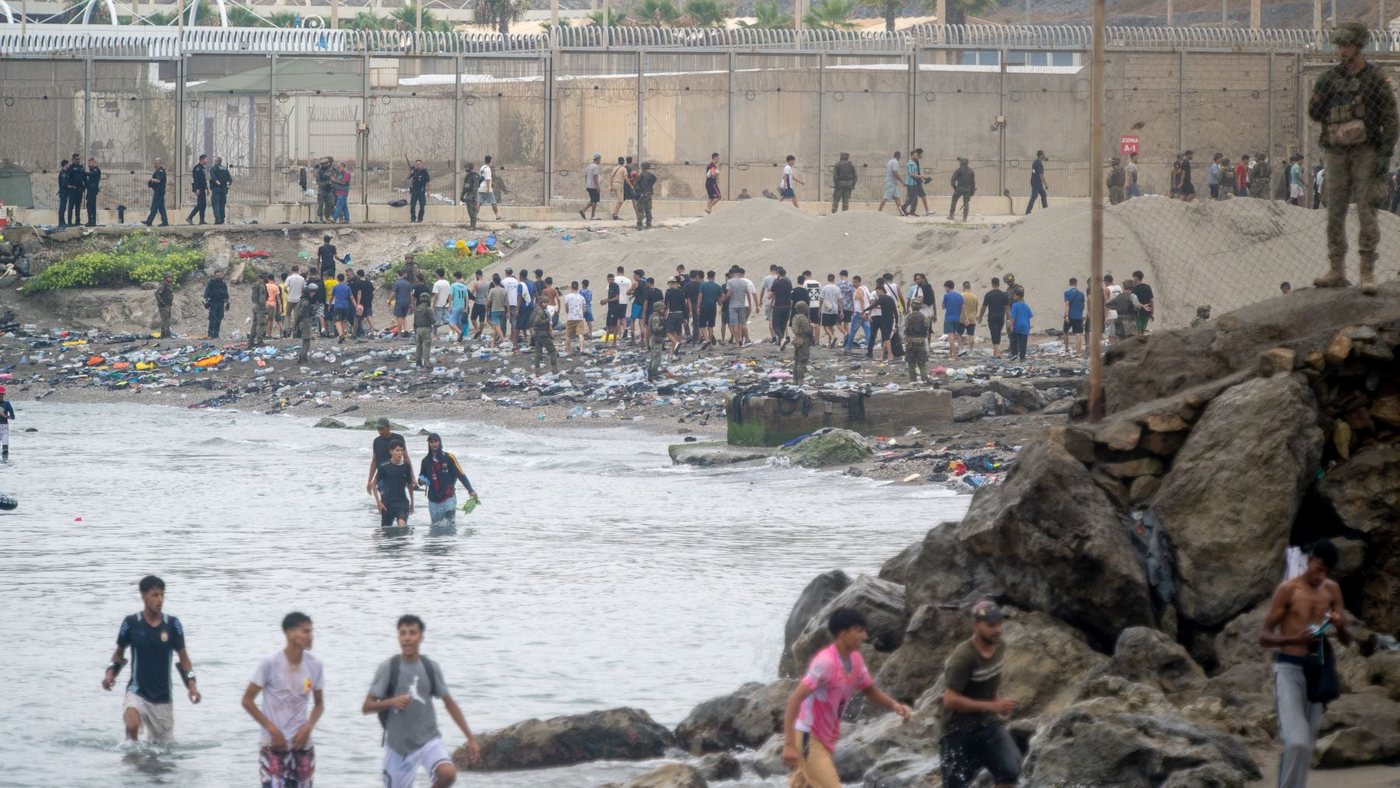
Mass arrivals of migrants from Morocco into the Spanish enclave of Ceuta have left at least 11 people dead, according to Morocco, as Spanish authorities estimate that thousands of people could still be in the city four days after one of the largest border surges on Spain's southern frontier. Spain has put the number of people who entered Ceuta at more than 50,000, while Morocco has reduced that estimate to around 40,000.
The death toll remains disputed between the two governments. Morocco says it has recovered 11 bodies off its coasts. In a joint statement, associations of Spanish judges and prosecutors said they mourned what they described as at least 72 deaths, together with a large number of injured and missing people whose final tally has yet to be established. Spanish media reports have mentioned at least 94 deaths in connection with the crisis.
Prime Minister Pedro Sánchez described the avalanche as «an attack on the integrity of Spain», but acknowledged Morocco's cooperation in repatriation efforts and border control. Foreign Minister José Manuel Albares also stressed that Morocco had offered collaboration from the first moment to prevent the flow and to ensure that people returned immediately. According to Albares, the vast majority of those who entered have already returned to Morocco, and Moroccan authorities have pledged to continue cooperating until the last person in Ceuta is returned.
The pressure on public services in Ceuta has been intense. More than 1,500 migrants have been treated at the University Hospital and health centres since Thursday, including 463 on Sunday, according to the National Institute of Health Management. Health officials reported no notable incidents in any level of care.
One of the most sensitive challenges involves unaccompanied minors. The city government says 862 migrant minors are currently accommodated in Ceuta, a situation it describes as an over-occupancy rate of 2,872 percent. The official capacity assigned to the local authorities by Spain's central administration is 29 places. «We are talking about an over-occupancy of almost 3,000 percent, 2,872 percent», said Alberto Gaitán, regional minister for the presidency and governance. He said the situation was under control, but recalled that something similar had happened in 2021 and warned that additional minors may still come forward after being taken in by private households.
Several associations of judges, prosecutors and human rights defenders reacted to the crisis by calling for a comprehensive and coordinated migration policy at European Union level. In a joint statement, they expressed grief over the loss of human life and solidarity with the people of Ceuta and Melilla. They said the events demanded an institutional response based on respect for the rule of law and fundamental human rights.
Albares said Spain would demand «solidarity» from EU member states when the matter is discussed on Tuesday. He stressed that Ceuta and Melilla are not only Spanish cities but also European cities forming the EU's external border, and that they are the only European cities with a land border with Africa. He added that Spain currently records the fewest irregular entries on any Mediterranean route, particularly through the two enclaves.
Before the wave of arrivals, Spain's National Intelligence Centre had reportedly warned the Interior Ministry several times that a large group of migrants was preparing to enter Ceuta. The city government has estimated that between 3,000 and 5,000 irregular migrants could still be in Ceuta as transfers back across the border continue. Online mapping service Google Maps has also drawn attention by showing Ceuta and Melilla as «territories in dispute» with a dashed border line.