Ceuta migrant crisis death toll reaches 88 as Spain opens criminal inquiry
At least 88 people have died after tens of thousands entered Ceuta from Morocco, and Spain's National Court is investigating whether the mass crossing was orchestrated by a criminal group. The crisis has triggered sharp criticism from EU partners and a diplomatic dispute with Morocco.
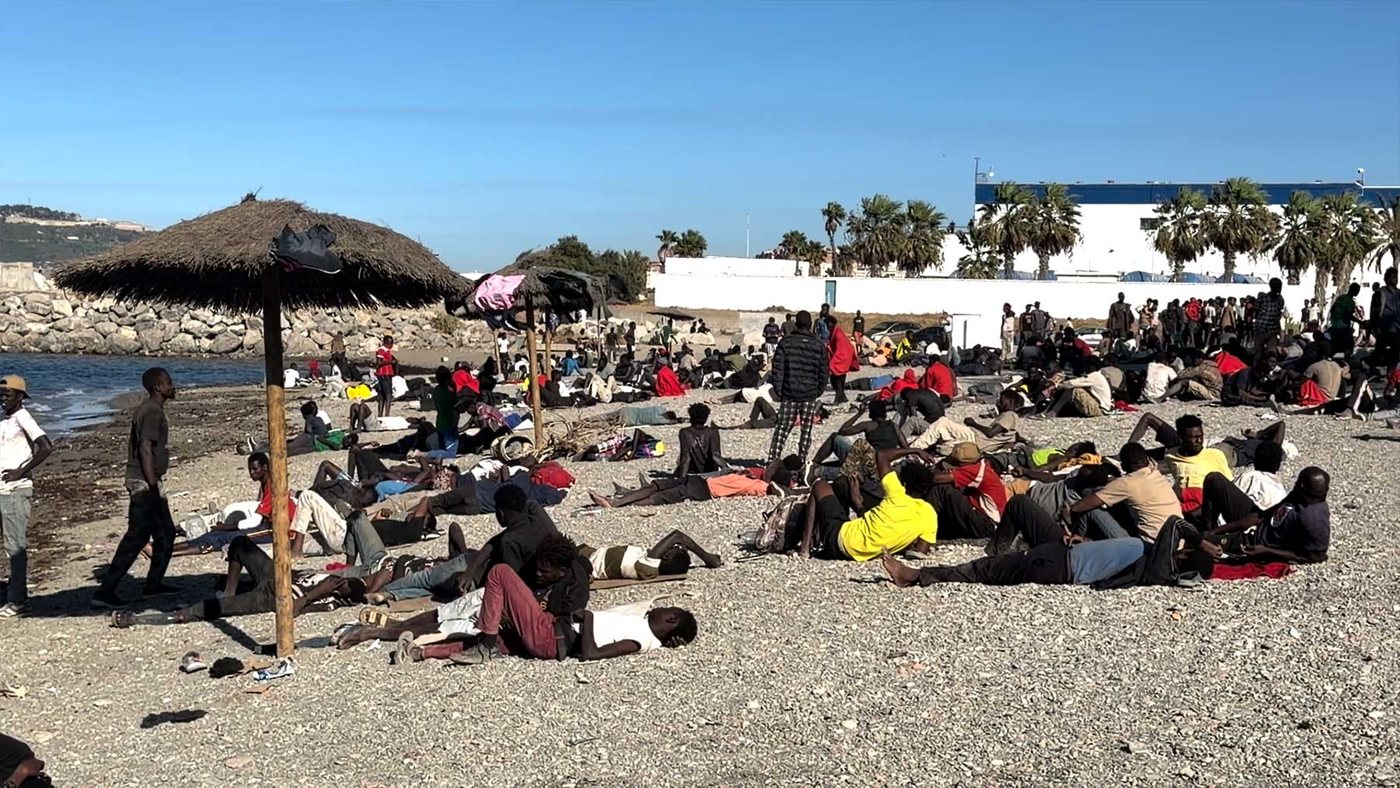
At least 88 people have died after tens of thousands of people crossed into the Spanish enclave of Ceuta from Morocco, as Spain's National Court opened an investigation into whether the mass border entry was organized by a criminal group.
The court has begun preliminary proceedings over the entry of Moroccan citizens into Ceuta on 30 and 31 July, following a complaint by the political party Iustitia Europa. The complaint argues the events may amount to offenses against the peace and independence of the state. Judge María Tardón, who heads court number three, ordered police to provide a report establishing whether a criminal organization was behind the crossing.
The regional government has put the number of people who crossed the Tarajal border at around 60,000. The provisional death toll has heightened tension over the management of the border and has become a central point of political confrontation in Spain.
Spanish Foreign Minister José Manuel Albares defended the government's position, saying Morocco cooperated «from the first moment» to try to stop the flow of people. He blamed what he called «the international reactionary» for acting with «synchronization» and «great speed» to amplify and spread lies and false news about the situation.
The opposition Popular Party has accused the government of failing to act on warnings. Senior party official Elías Bendodo said there was a «war inside» the cabinet, with the Interior and Defense ministries blaming each other while Prime Minister Pedro Sánchez was on holiday. «The most worrying thing is that the CNI reported in advance that this could happen and nobody heeded that alert,» Bendodo said. He added that 22 EU countries had signed a letter against Spain's migration policy and some had suspended the Schengen agreement, insisting that the crisis had not been resolved while «bodies are still being counted».
Italy's Foreign Minister Antonio Tajani also criticized Madrid, saying Spain was regularizing 500,000 undocumented foreigners without consulting its European partners. «Spain is regularizing 500,000 undocumented foreigners and it is doing so without having shared this decision with any of its European partners, and this is not right,» he told Corriere della Sera.
The crisis has deepened divisions inside the European Union. A bloc of 23 Western countries, including 22 EU member states and the United States, has taken a critical position against Spain's migration policy. Italy temporarily suspended Schengen with Spain, Denmark called for studying Spain's expulsion from the border-free area, and Finland asked for Spain to be suspended and prepared border controls.
The other EU countries that supported the critical position were Germany, Austria, Belgium, Bulgaria, Cyprus, Croatia, the Czech Republic, Estonia, Greece, Hungary, Latvia, Lithuania, Malta, the Netherlands, Poland, Romania, Slovakia, Slovenia and Sweden. France, Portugal, Ireland and Luxembourg declined to sign the document.
European Commission President Ursula von der Leyen has told Prime Minister Pedro Sánchez that Morocco bears responsibility for the crisis caused by the entry of 60,000 undocumented migrants. The affair has set off a broader dispute between Madrid, Rabat and Brussels over migration management and border security, while the National Court continues its investigation into the circumstances of the entry and any responsibilities arising from the events.