France protests over school funding turn violent as police arrest 160
Tens of thousands demonstrated against underfunding in French education, with clashes in Paris and Marseille, tear gas deployed and around 160 arrests as President Macron appealed for calm.
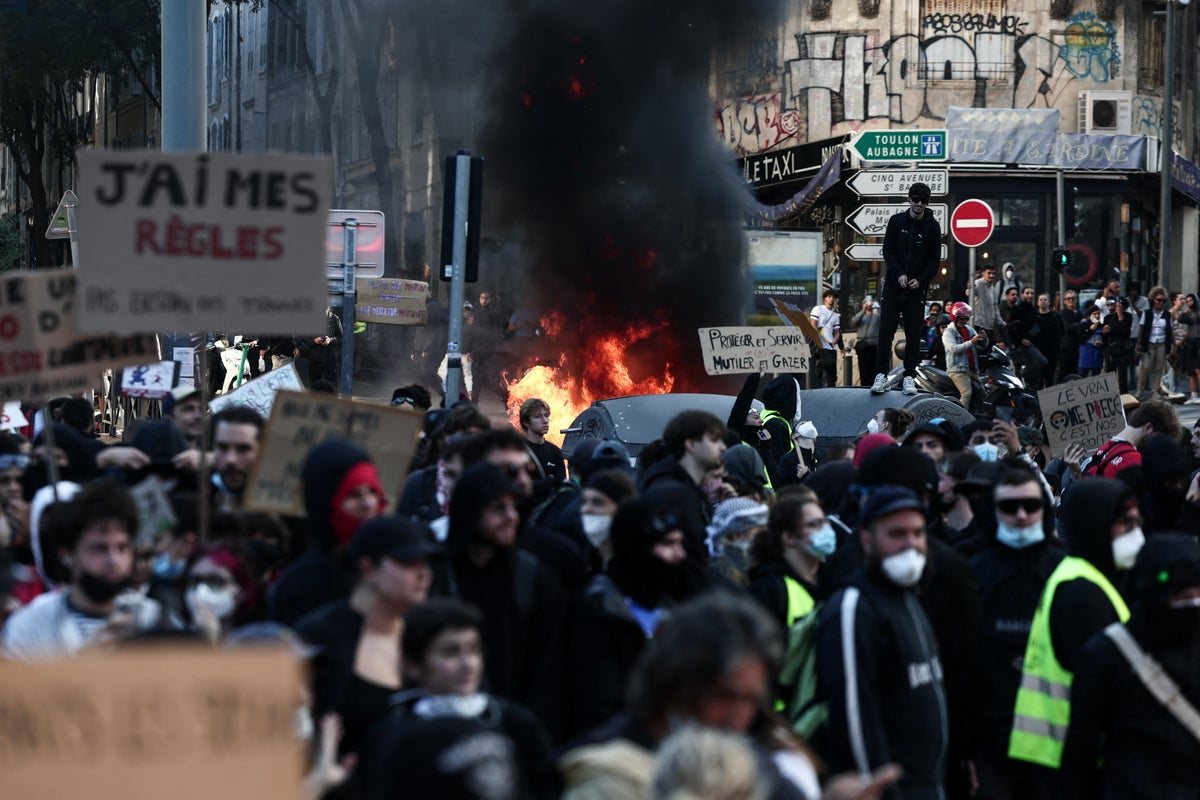
Widespread demonstrations against underfunding in France's education system turned violent, with police firing tear gas and making around 160 arrests as tens of thousands of protesters took to the streets across the country. Clashes were reported in Paris and Marseille, where fires were set and officers in riot gear moved to disperse crowds.
President Emmanuel Macron appealed for calm as the scale of the unrest became clear. The protests drew students and education workers angered by what organisers describe as chronic shortfalls in school and university budgets, a grievance that has been building through the academic year and now spilled into confrontations with security forces in several cities.
The interior ministry and police prefectures reported a nationwide turnout in the tens of thousands, with the largest concentrations in the capital and in Marseille. In Paris, tear gas was used against groups that police said had broken away from the main marches, while in the southern port city fires were lit and projectiles thrown. Authorities said the arrests covered a range of offences, from public order breaches to damage and violence against officers.
The dispute centres on funding for schools, colleges and universities, where unions and student organisations argue that staffing levels, building maintenance and support for pupils have been squeezed for years. They say the shortfall has been worsened by inflation and by budget decisions that have not kept pace with the needs of classrooms, particularly in disadvantaged areas. The government has defended its record on education spending but has faced repeated criticism over class sizes and teacher recruitment.
Macron's call for calm reflects the political sensitivity of the unrest. Education is one of the most closely watched portfolios in France, and street protests over school policy have repeatedly forced governments onto the defensive. The president's intervention was intended to lower the temperature while ministers sought to reopen dialogue with unions, though no immediate breakthrough was announced.
The violence also raises questions about policing tactics at large demonstrations, a recurring theme in France since the yellow-vest and pension reform protests of recent years. Tear gas in dense urban areas can affect bystanders as well as demonstrators, and images of confrontations spread quickly on social media, shaping public perceptions of both the protesters and the authorities.
For religious and civic communities, the unrest touches on a broader debate about the place of schools as formative institutions and about the state's duty to provide equitable education. Many congregations and charities run tutoring and support programmes in the same neighbourhoods where funding pressures are most acute, and they have warned that repeated disruption harms the pupils least able to absorb it.
Unions have signalled that further action is possible if their demands are not addressed, while the government has stressed that it is listening and that violence only damages the cause. The coming days will show whether the appeal for calm holds or whether the education dispute becomes the latest in a series of confrontations testing the government's authority.
6