Most migrants who entered Ceuta have returned after deadly mass crossing
Up to 60,000 people crossed from Morocco into the Spanish enclave in one day; officials say 37,000 returned as the influx sparked a political crisis.
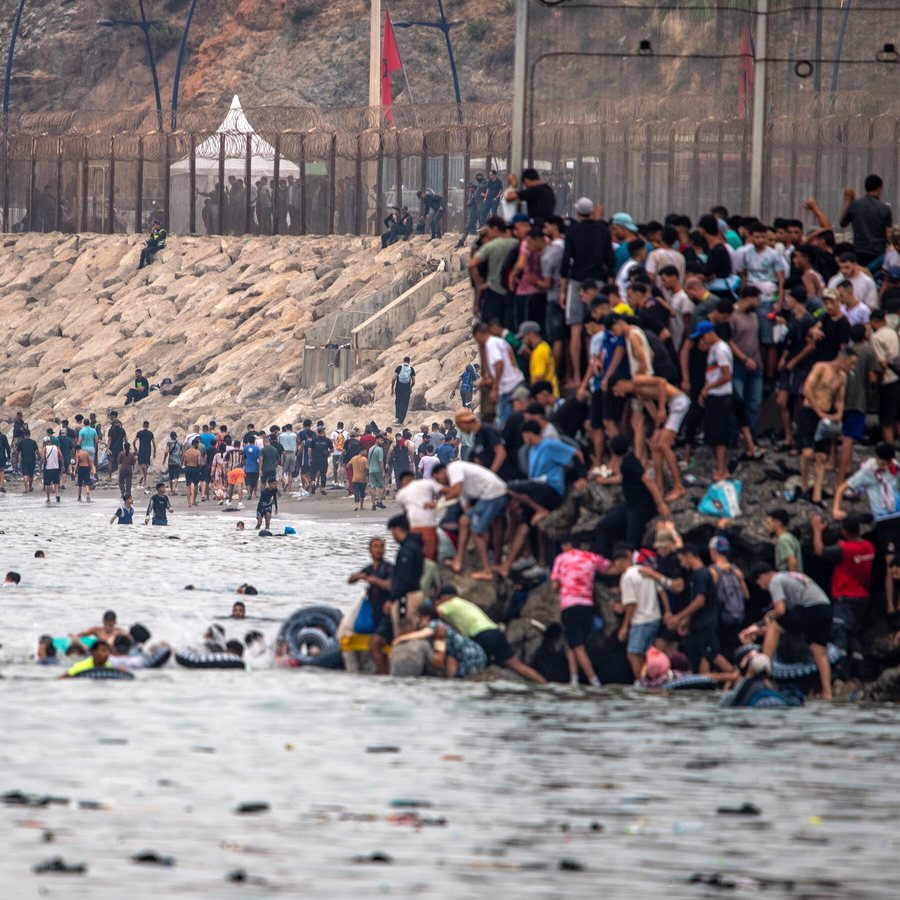
The Spanish enclave of Ceuta has been thrown into crisis after up to 60,000 migrants crossed into the territory from Morocco in a single day, overwhelming a city of 85,000 people and leaving at least 34 people dead. Most of those who entered have already returned, Spanish officials said, but the sudden influx has set off a political storm for Madrid and drawn sharp criticism from other European Union member states.
Around 37,000 of the migrants who made the crossing were back in Morocco within a day of their arrival, according to officials. The unprecedented scale of the movement, however, has raised urgent questions about border control, migration policy and relations between Spain and Morocco at the very edge of the European Union.
Ceuta, a small Spanish territory on the North African coast, usually has a population of roughly 85,000. For many migrants, the enclave represents a gateway into Europe, and the dramatic events of this week turned that gateway into a flashpoint. Pedro Sánchez, the Spanish prime minister, described the mass entry as «a violation of Spain’s territorial integrity».
The episode quickly expanded beyond a border security emergency into a political and diplomatic problem for the government in Madrid. EU countries reacted with a mixture of solidarity and criticism, with some voices calling for Spain to be suspended from the Schengen free-movement zone. That demand reflected growing unease among member states about the pressure on Europe’s external borders.
For Sánchez’s pro-immigration government, the crisis has landed at the worst possible moment. The sudden arrival of tens of thousands of people has strained local services and emergency capacities in Ceuta, and the death toll has intensified scrutiny of the human cost of the crossing. At least 34 people died during the attempt to reach Spanish territory, officials said.
The returns were described by officials as a rapid resolution to the immediate emergency, but the underlying questions are unlikely to disappear that quickly. The movement of such a large number of people across one of the European Union’s few land borders with Africa is a reminder of the constant pressure on migration routes and of the difficulty of securing pockets of European territory outside the continent.
The dispute has also put the spotlight on Spain’s relationship with Morocco. Cross-border tensions are a recurring issue in Ceuta and the neighbouring enclave of Melilla, where migrants have repeatedly attempted to storm fences or cross at low tide. In this case, the sheer scale of the exodus made the event exceptional even by the standards of a border that is frequently in the headlines.
Early official figures pointed to a swift outflow, but local authorities were left to manage the aftermath of a humanitarian emergency that developed in less than a day. The Spanish government faced pressure to explain both how the crossing was able to happen and whether enough was being done for those still in the territory.
The broader European context has made the episode particularly sensitive. With debates over migration already polarised across the continent, the images from Ceuta have given ammunition to governments seeking tighter border controls and criticizing Spain as too permissive. Calls for a Schengen suspension, while unlikely to be acted on quickly, illustrate how easily a single border incident can turn into a wider European argument.
In the meantime, officials have focused on counting those who remain and on providing assistance in a city not built for such numbers. The return of most migrants within a day has eased the immediate pressure, but the political fallout from the deadliest and largest such incident in years is only beginning.