Trump Warns US Could Face «Ceuta Scenario» as Migrant Deaths Rise to 34
At least 34 migrants have died trying to reach the Spanish enclave of Ceuta. US President Donald Trump says similar scenes could occur in America if Democrats win the 2028 election, while EU leaders debate suspending Spain from the Schengen area.
At least 34 migrants have died trying to reach the Spanish enclave of Ceuta from Morocco, as US President Donald Trump used the crisis to warn that the United States could face a similar situation within years. The death toll was confirmed by the regional president of Ceuta, Juan Jesús Vivas, according to Spanish media reports; authorities had earlier spoken of 28 fatalities. Ceuta, a Spanish territory on the North African coast, is enclosed by the Mediterranean Sea and Moroccan territory. The latest deaths came as mass border crossings were also reported overnight at the second Spanish exclave in North Africa.
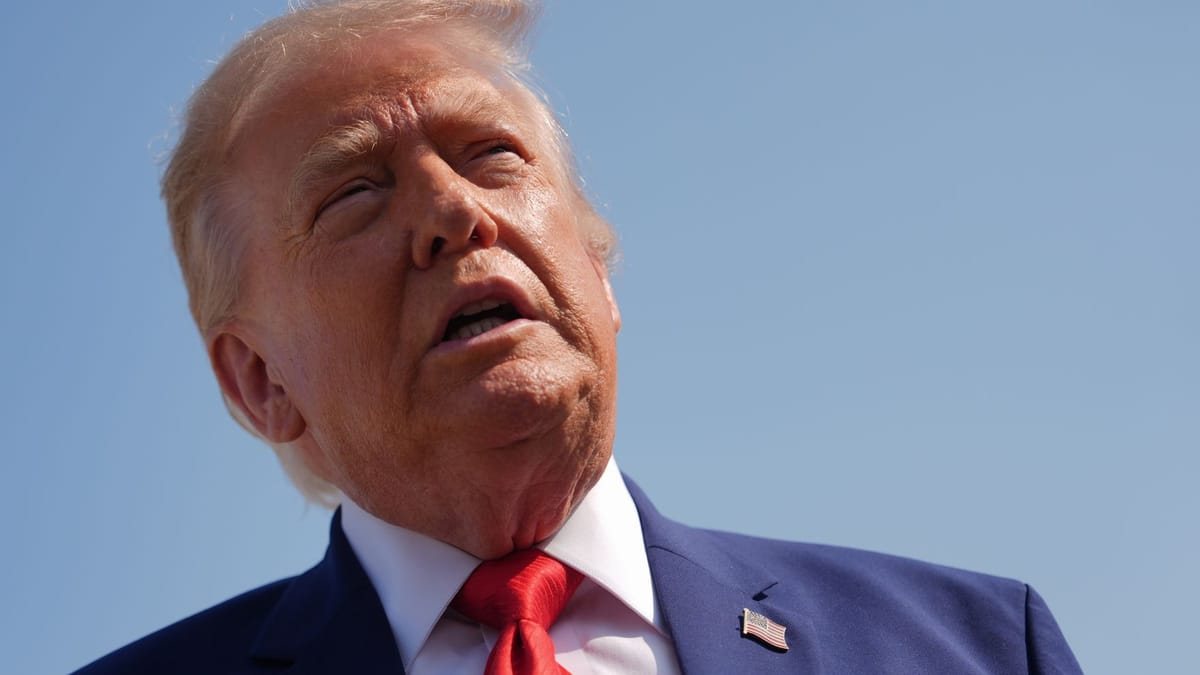
Trump, quoted by Fox News, described the images from Ceuta as «terrible» and told his audience to «remember this picture». He said the United States would face the same scenario in three years if the «wrong side» takes power, a reference to a possible victory by the Democrats in the 2028 presidential election. «This is what will happen to us in three years,» Trump said, adding that Americans would no longer lead a good life if Democrats were in charge. The president, who has built his political brand on restrictive migration policies and aggressive deportation measures, has repeatedly accused the Democratic Party of harming the country with a liberal approach to immigration.
In Brussels, the EU border agency Frontex said it had not yet received a formal request for assistance from Madrid. «Frontex can support a member state, but only at its request,» the agency said, adding that it was continuously monitoring the situation. EU Migration Commissioner Magnus Brunner had signaled on Thursday that the EU was ready to help Spain, including through Frontex, to bring the situation in Ceuta under control.
Danish Prime Minister Mette Frederiksen suggested that the EU should consider suspending Spain from the Schengen area, the border-free travel zone that includes most EU countries. «It goes without saying that the EU must immediately take all necessary measures and examine all options, including a suspension of the Schengen cooperation,» Frederiksen said. «Uncontrolled immigration is a threat to Europe and to Denmark.» She and Italian Prime Minister Giorgia Meloni want to bring European leaders together to discuss the crisis. Meloni had first floated the idea of excluding Spain from Schengen; Madrid rejected the proposal and summoned the Italian ambassador. Finland later joined the call. German Chancellor Friedrich Merz took a different line, welcoming the stated intention of the Spanish government not to allow irregular migrants to move on to the European mainland.
Britain also offered help. Prime Minister Andy Burnham said the situation was primarily a matter for the Spanish government but was nonetheless concerning. «We are making contact with the Spanish government and the Spanish authorities to offer support, but also to understand the impact of this situation better,» he said, according to the PA news agency.
In Germany, conservative politicians blamed Madrid for the escalation. Günter Krings, deputy leader of the CDU/CSU parliamentary group, told the tabloid Bild that a decision by the Spanish government to grant citizenship to 500,000 Africans who had entered the country irregularly had intensified the problem. «Whoever rewards illegal entry gets more illegal entry,» Krings said. He called for urgent talks with Morocco, arguing that only with help from the southern neighbour could a larger migrant surge into Europe be prevented. His colleague Alexander Throm, the CDU/CSU parliamentary group spokesman for interior policy, said the events in Ceuta provided proof that pull factors existed.
The Spanish government says the sudden rush on Ceuta was triggered by rumors spread by migrant-smuggling networks after a ruling by the Spanish Supreme Court earlier this month. According to the ruling, the immediate return of migrants who cross the border illegally does not apply to those who arrive by sea. Throm said the court ruling had encouraged young men and teenagers to attempt the crossing and had cost lives.