US envoy Witkoff travels to Russia with new peace proposals
After meeting Ukrainian President Zelensky and European leaders in Oslo, US negotiator Steve Witkoff is flying to St. Petersburg to present Moscow with peace proposals drawn up with European and American partners. Norway's prime minister hopes the talks prepare a top-level meeting between Ukraine, Russia and the US.
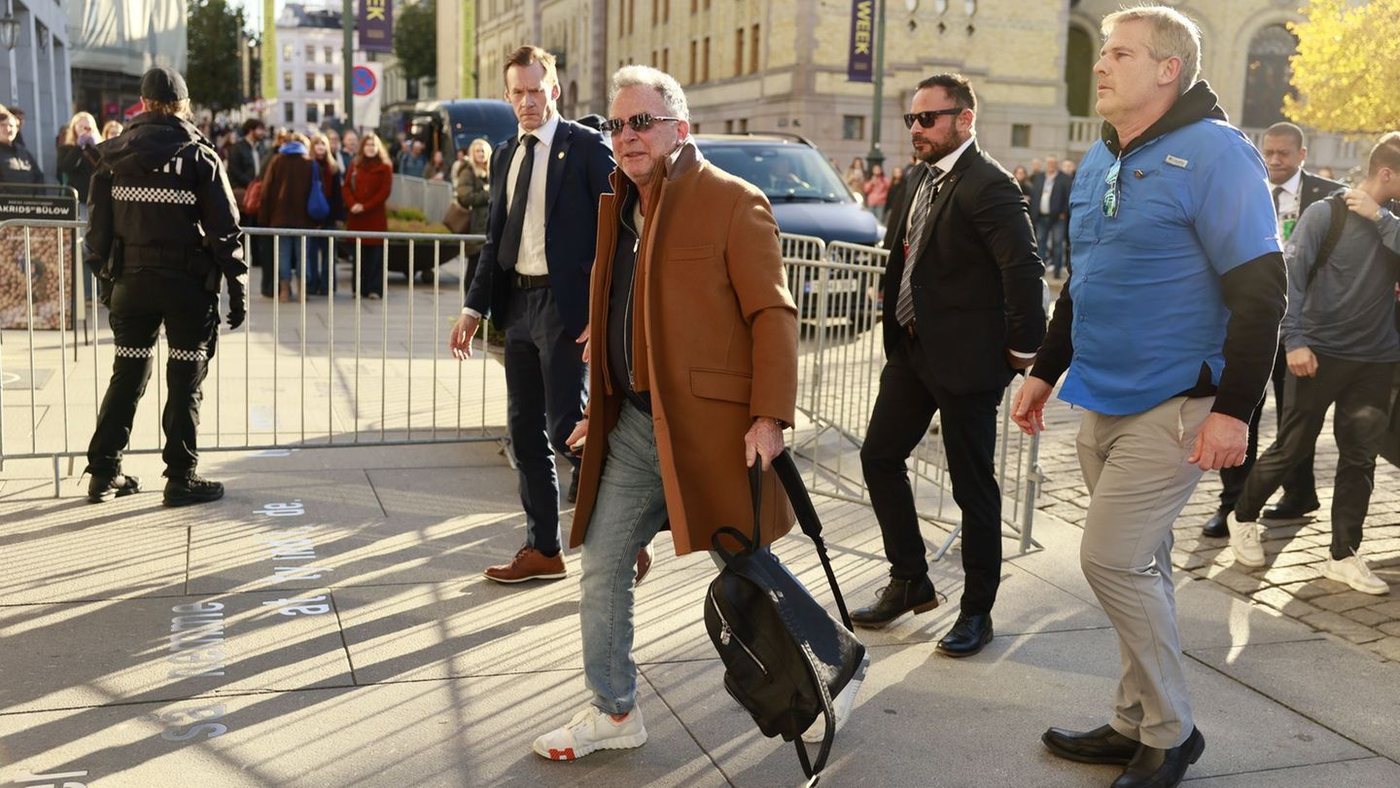
US negotiator Steve Witkoff is travelling to Russia to present the Kremlin with new peace proposals, following talks with Ukrainian President Volodymyr Zelensky and European leaders in Oslo. Norway's prime minister, Jonas Gahr Støre, said Witkoff would fly to St. Petersburg for talks with the Russian leadership, where the confidant of US President Donald Trump intends to set out proposals «worked out by European and American colleagues».
According to a US official, Washington hopes the draft peace plan «paves the way for direct trilateral and then broader multilateral negotiations». Ukraine presented new ideas and proposals in Oslo, which were discussed in detail, with «significant progress» and «strong convergences at working level» reported. Støre expressed hope that Witkoff's appointment in St. Petersburg could prepare «a meeting at the highest political level» — a summit of senior representatives from Ukraine, Russia and the United States, as Zelensky has repeatedly proposed. Russia's government has so far rejected such a meeting or suggested Moscow as the venue, which is unacceptable to Ukraine.
Witkoff and Jared Kushner, Trump's son-in-law, have travelled to Russia several times before, but visited Kyiv for the first time in early September — more than four and a half years after the war began and more than a year and a half into Trump's second term. Kushner is expected to join the St. Petersburg talks only remotely this time.
In his diplomatic efforts to end the war, Trump has primarily pressured Ukraine. While he rarely criticises Kremlin chief Vladimir Putin and recently even eased sanctions on Russia, he has publicly attacked Zelensky, suggested he resign and said negotiations with Putin would be far easier. Critics accuse Trump of courting the Kremlin leader despite his war of aggression and of abandoning Ukrainians, who depend on Western help to defend against the Russian invaders. Since taking office, Trump has largely sidelined Europeans as traditional US allies in his peace efforts.
Støre said at the Oslo meeting that it is Europe that must live with the consequences of the war in Ukraine, so European states must play a more central role in negotiations than before. «We are losing lives and time,» the Norwegian prime minister said. Oslo is a new venue for the hitherto unsuccessful peace efforts, and the format chosen on Tuesday was also new. Besides Zelensky and the US delegation, representatives of several European countries took part, some — including from Germany, the EU and NATO — joining by video. Talks covered security guarantees for Ukraine, territorial questions, sanctions and European security after the war ends, according to Støre. The aim, the Norwegian government said, was «to steer diplomatic efforts back into more constructive channels». Zelensky stressed after the meeting: «We are ready for negotiations. We are not losing the war, but we are losing lives. And because Russia is attacking, we are losing lives and time.»
Trump's idea that he could end the Ukraine war quickly — even within 24 hours, as he boasted repeatedly — has not materialised since he took office. Under him, the US no longer sees itself as Kyiv's ally but rather as a mediator with its own interests in mind. Trump repeatedly highlights Putin's supposed willingness to make peace while dismissing Ukraine's resistance against a superior opponent and assigning it considerable blame for the years-long war. He also accuses Ukraine of failing to provide something in return for US aid, reflecting his transactional understanding of foreign and peace policy. In recent days Trump has struck highly controversial agreements with Moscow, including on halting sanctions and Russian diesel exports, from which he hopes for momentum ahead of important US parliamentary elections in two weeks. At the same time, key military aid for Ukraine is stalled. Kyiv has recently complained about missing US warnings of ballistic missile launches and problems with the US satellite internet service Starlink, which hamper the Ukrainian armed forces' defence against Russian attacks. There are differing accounts of who is responsible for throttling Starlink; the White House and Elon Musk, owner of operator SpaceX, rejected accusations of deliberate restriction.
8