Sánchez travels to Ceuta to address migration crisis after emergency request rejected
Prime Minister Pedro Sánchez visits Ceuta with Interior Minister Fernando Grande-Marlaska to coordinate the response to the migration crisis, after Spain rejected a national emergency request and announced the deployment of the Armed Forces in the city.
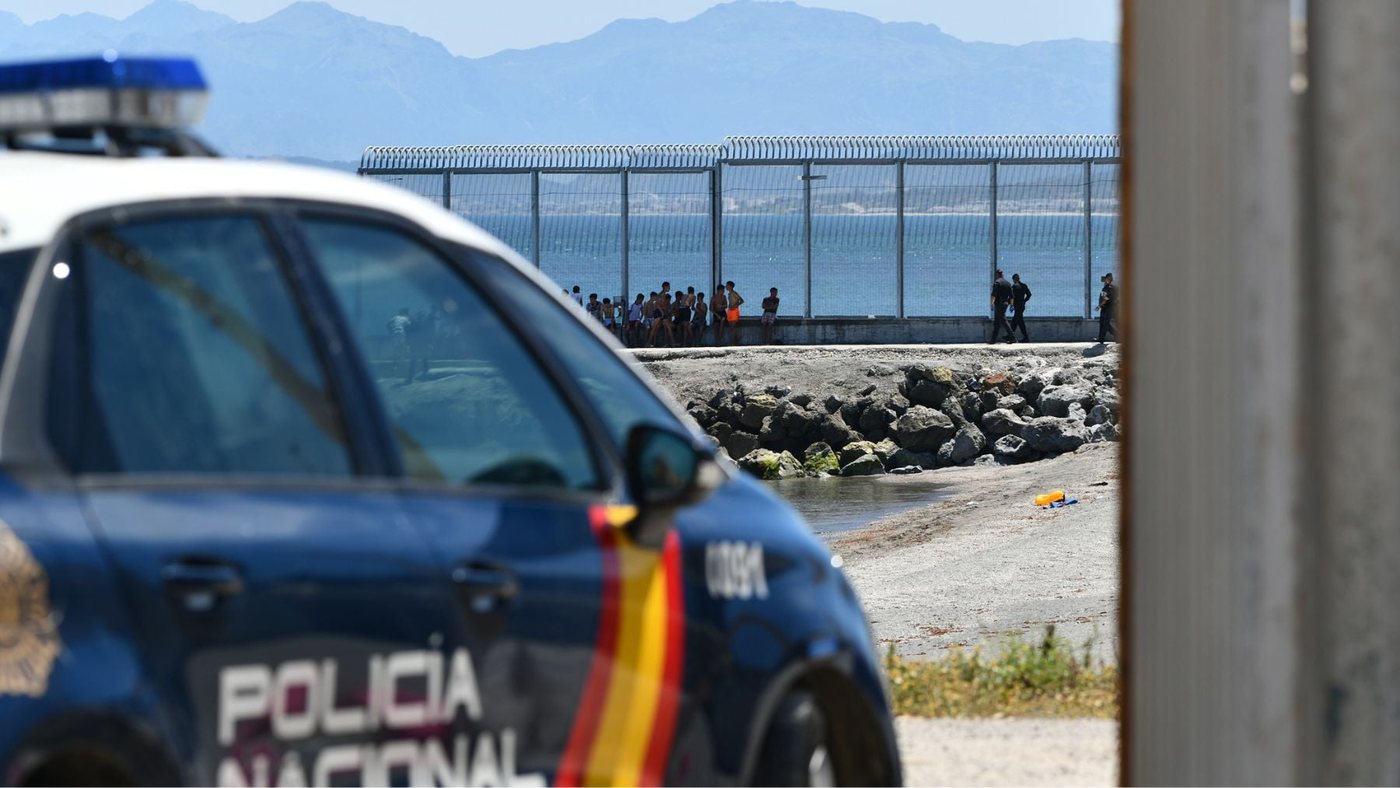
Pedro Sánchez is travelling to Ceuta on Friday to oversee the Spanish government's response to the migration crisis, after the administration rejected a request to declare a national emergency and announced the deployment of the Armed Forces in the city.
The prime minister will be accompanied by Interior Minister Fernando Grande-Marlaska. According to the government's schedule, Sánchez will arrive at the Tarajal border crossing at 11:40 to meet representatives of the State security forces. At noon, he is due to attend a coordination meeting at the Assembly Palace with Juan Jesús Vivas, the president of the autonomous city; the government delegate, Miguel Ángel Pérez; senior officers of the National Police and the Civil Guard; and the heads of the local Temporary Stay Centre for Immigrants (CETI) and of the Red Cross in Ceuta. After the meeting, Sánchez and Vivas are expected to make a public statement to the media.
The visit follows days of heightened tension over migrants reaching the North African enclave by sea. Vivas had asked the central government to activate a national emergency, a request supported by all political groups represented in the Ceuta assembly. He made the appeal under national security regulations. On Thursday evening, the government announced that the Armed Forces would be deployed in Ceuta to guarantee security.
The Interior Ministry, however, has turned down the emergency declaration. The ministry argues that existing law does not include migration flows among the cases in which the civil protection mechanism can be activated. According to the Civil Protection Law, national emergencies are reserved for natural and technological hazards such as floods, forest fires, earthquakes and accidents involving dangerous substances. In a statement, the department led by Grande-Marlaska insisted that the government has been, is and will continue to exercise its powers and permanently guarantee security throughout the autonomous city.
Interior also said that the Secretary of State for Security, Aina Calvo, is in permanent contact with Ceuta. The ministry emphasised that several departments involved in migration management — Interior, Migration, Territorial Policy and Children — are acting in a coordinated manner to respond as quickly and effectively as possible. It highlighted what it called the «loyal and permanent» cooperation of Morocco, which is helping to stop several attempts to enter Ceuta from Moroccan territory. Madrid says it has reinforced resources, equipment and personnel over the past week to ensure border security, migration control and humanitarian assistance, and to ensure that no human life is put at risk at sea.
The new pressure on Ceuta has revived a long-running debate over border security in Spain's two North African enclaves. Residents have for years complained about what they describe as inadequate security and border measures between Spain and Morocco. Ceuta and Melilla themselves have been under Spanish sovereignty for centuries and have never been part of Morocco, a point that Spanish officials and many locals stress whenever migration tensions escalate.
Ceuta was conquered by Portugal in 1415, bringing an end to Islamic rule over the territory. It came under the Spanish crown in 1580, when the crowns of Portugal and Spain were united under Philip II. When Portugal regained its independence in 1640, Ceuta voluntarily chose to remain Spanish. Melilla, for its part, was taken peacefully by Pedro de Estopiñán in 1497 for the Catholic Monarchs, after the Crown of Castile found the site uninhabited as a result of a brutal civil war. Before that, the city had been ruled successively by the Marinids, the Almohads and the Almoravids.
Morocco has long claimed both cities, regarding them as Moroccan territory under what it describes as «colonial foreign occupation». The claim is rooted in a nationalist project that envisages a «Greater Morocco» incorporating Western Sahara, parts of Algeria and Mauritania, and also Ceuta, Melilla and the Canary Islands. Spain rejects that view and insists that the two cities are integral and indissoluble parts of the national territory. The latest crisis has reignited debate in Spain about frontier control, and many Ceuta residents who have long complained about the state of border security are pressing for stronger measures.