Dalai Lama urges universal responsibility as Buddhism meets modern science
The Dalai Lama has called on all major religious traditions to adopt a shared commitment to love, compassion and forgiveness, as Buddhism's mindfulness teachings gain wider scientific and Western interest.
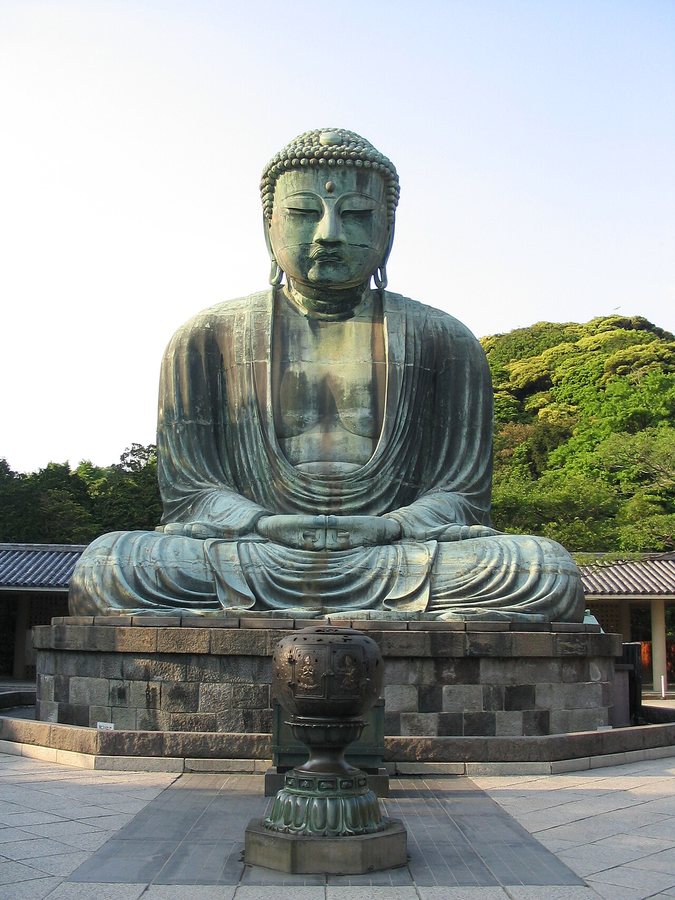
The Dalai Lama has called on all major religious traditions to adopt a shared sense of universal responsibility, affirming a message of love, compassion and forgiveness. The appeal reflects a wider engagement between Buddhism and the modern scientific world, where the tradition's mindfulness practices are being examined for their effects on health and well-being.
Buddhism emerged in India in the 6th century BC from the teachings of Gautama Buddha, who offered an alternative to the Brahmanic sacrifice and ritual of Hinduism at a time of great social change and intense religious activity. Over the following centuries it spread to Southeast Asia, China, Korea and Japan, where it shaped spiritual, cultural and social life. In the 20th century its modernised, mindfulness-oriented forms reached the West.
After the Buddha's death, Buddhist councils spent centuries trying to establish his original teachings. After 18 councils, two principal schools are said to have survived. Theravāda regards itself as closest to the traditional teachings and holds that full enlightenment, a state in which all suffering ceases and which is called Nirvana, is attainable mainly by monks, while lay people can improve their future rebirths by following Buddhist principles. Mahāyāna holds that enlightenment can be reached in a single lifetime, even by a layperson. According to the account provided, Mahāyāna is by far the larger tradition today, with 53 per cent of practitioners compared with 36 per cent for Theravāda.
The Mahāyāna tradition has developed further schools of thought that share several ideas: that every person has a Buddha nature, that awareness is reached by emptying the mind of preconceptions, that sincere practices such as meditation, mantra recitation, prayer and physical exercise can lead to realisation, that the true self is nondual, and that enlightenment may be possible within one lifetime. Some adherents also regard Buddhist practice as compatible with, or complementary to, other religions, including Christianity.
At the core of the teaching lies the recognition of suffering, impermanence and no-self. Existence is described as painful, because individuality implies limitation, which gives rise to desire, and desire inevitably produces suffering. What people crave is transitory, leading to disappointment and sorrow. The path taught by the Buddha is meant to dispel the ignorance that sustains this suffering. In this view, the ego is a delusion, and the things with which people identify themselves, such as fortune, social position, family, body and even mind, are not their true selves.
Buddhists describe human existence through five aggregates: physical form, feelings or sensations, perceptions or cognition, mental formations or dispositions such as intentions, and consciousness or self-awareness. A person is understood as a process of continuous change with no fixed underlying entity. Buddhists accept karma and rebirth, a potentially endless cycle of worldly existence in which good conduct brings pleasant results and bad conduct brings evil ones, and in which some consequences appear in the same life, others in the next and others in more distant lives. That acceptance raises a long-standing philosophical difficulty, namely how rebirth can occur without a permanent subject to be reborn, a problem that non-Buddhist Indian philosophers pressed against the tradition.
11