Epiphanius urges Orthodox Christians to hold church unity in Christ
The Ukrainian church leader’s sermon links unity to Christ, the tested teaching of the Church Fathers and spiritual discernment rather than loyalty to personalities.
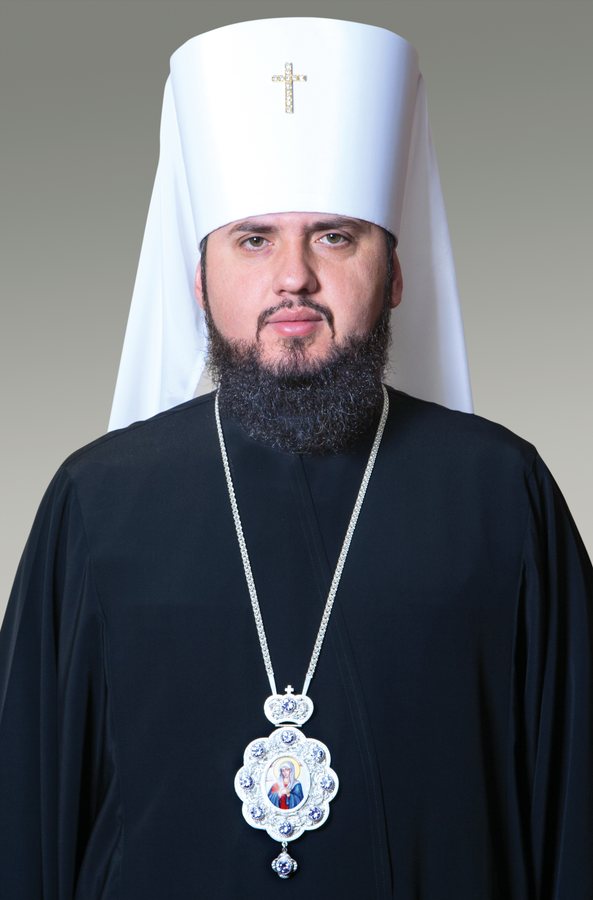
Metropolitan Epiphanius of Kyiv and All Ukraine has used a sermon for the tenth Sunday after Pentecost to urge Christians to hold firmly to the unity of the Church in Christ, listen to the guidance of its fathers and teachers, and avoid temptation. In the 2026 Orthodox liturgical cycle, the tenth Sunday after Pentecost fell on August 9, following Pentecost on May 31.
The three-part appeal is concise, but it sits within a consistent line of teaching Epiphanius has developed during the year. The first point concerns the source of church unity. For him, unity is not ultimately produced by institutional loyalty, a celebrated leader or a faction. Its centre is Christ.
That principle was stated particularly clearly on June 29, the feast of the apostles Peter and Paul. Epiphanius argued that the joint commemoration of two remarkably different apostles is itself a lesson: the Church is not Peter’s or Paul’s but Christ’s. The distinction matters because Christian history repeatedly confronts the temptation to turn spiritual authority into personal ownership.
Peter and Paul can be honoured precisely because neither replaces the one they preach. Their authority, in this reading, is derivative rather than absolute. That also explains the second part of the August sermon, which asks believers to listen to the fathers and teachers of the Church. The point is not to exchange one personality cult for an older one. It is to receive teachers as witnesses to a faith that precedes them and is tested within the life of the Church.
In a March sermon for the Triumph of Orthodoxy, Epiphanius stressed the importance of true church teaching, apostolic continuity and sacramental life. Orthodox tradition therefore treats the Church Fathers not as isolated intellectual celebrities but as participants in a long communal act of interpretation. Their writings matter because the Church has received them as reliable guides to Scripture, worship and doctrine.
This is where the third element — avoiding temptation — becomes essential. Temptation in Christian language is broader than an obvious invitation to break a moral rule. It can include the desire to win a dispute at the expense of truth, the seduction of certainty without humility, resentment that hardens into identity, or devotion to a charismatic figure that makes criticism impossible. A community can speak loudly about unity while being driven by precisely those forces that destroy it.
Epiphanius addressed the positive side of the same question in April. He described the Church as the place in which believers enter a mystical spiritual unity with one another and with Christ, and said that this communion enables personal faith to grow. Unity, then, is not meant to erase the person. It creates a framework in which the person can mature without being isolated from the experience of others.
The liturgical setting adds another layer. The Orthodox Church of Ukraine celebrated Pentecost on May 31, speaking of the feast as the birth of the New Testament Church. The Sundays that follow are counted from that event. By the tenth Sunday, the question is no longer simply how the Church begins but how it remains a Church — a community of different people who confess a common faith.
There is also an institutional background. In July the Orthodox Church of Ukraine held an expanded Bishops’ Council under Epiphanius’s chairmanship. Councils, synods and episcopal structures represent the formal dimension of ecclesial unity. Yet an administrative structure cannot manufacture spiritual communion. The sermon therefore directs attention to the interior conditions that make a structure meaningful: fidelity to Christ, continuity of teaching and the discipline of discernment.
The relationship between tradition and freedom is especially important here. A tradition can be misused if it becomes a collection of quotations deployed to stop every question. Epiphanius’s wider emphasis on Christ as the center creates a different logic: inherited teaching has authority because it is meant to lead the believer toward the Gospel, not because age alone makes every formulation immune from interpretation.
The same principle places limits on obedience. Christian obedience is not supposed to turn a spiritual teacher into an unquestionable owner of another person’s conscience. A teacher stands inside the Church’s tradition and can therefore also be judged by that tradition. This mutual accountability is one reason Orthodoxy places such weight on councils and reception rather than on private revelation alone.
For readers outside Ukraine, the message offers a useful way to understand a central Orthodox instinct. Orthodoxy places great weight on tradition but does not, at least in its own theological account, treat tradition as a museum. Tradition is a living process of receiving, testing and handing on faith. The authority of a teacher is measured by whether that teacher serves this transmission rather than becoming its endpoint.
The same logic guards against a shallow idea of unity. Christian unity is not merely the absence of disagreement. Peter and Paul themselves represent difference of biography, temperament and mission. The unity Epiphanius invokes is stronger because it has a centre outside both of them.
His August sermon can therefore be read as a compact rule of spiritual order: Christ before personalities, received wisdom before novelty for novelty’s sake, and discernment before impulse. Those priorities do not eliminate conflict, but they establish a way to judge whether conflict is serving truth or simply feeding division. In an age of instant authority and permanent argument, that is a distinctly demanding vision of what it means to remain one Church.
66