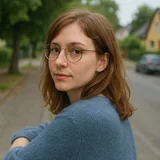
Alix Urien Finds the Impressionists' Paris Through Her Lens
French photographer Alix Urien's series Circa 2020s, shot between Paris and Normandy, uses movement, light and color to reveal how Impressionist sensibility survives in contemporary city life.
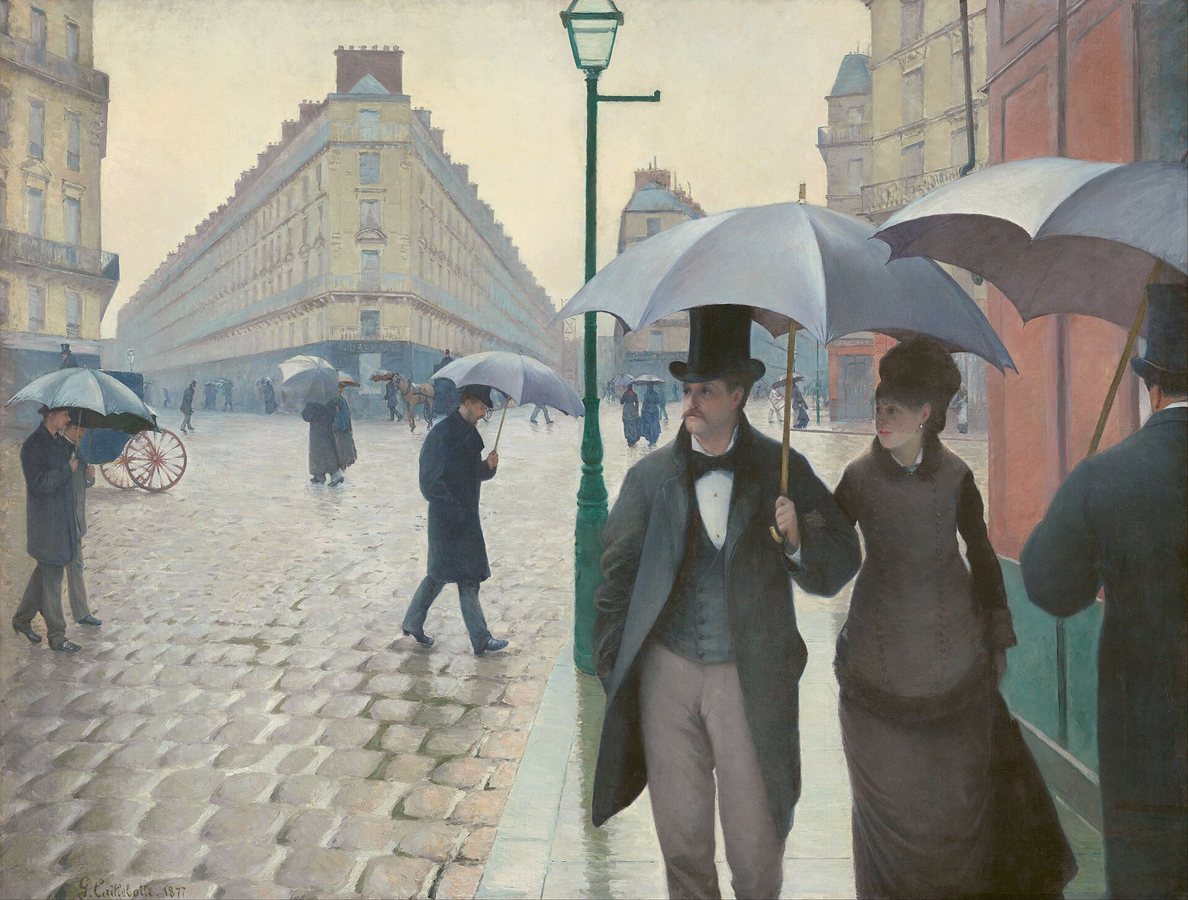
Does the Paris of the Impressionists still exist? French photographer and videographer Alix Urien believes the answer lies less in what we see than in how we look. In her series Circa 2020s, created between Paris and Normandy, she transforms ordinary contemporary scenes into photographs and videos shaped by the light, color and fleeting sensations of nineteenth-century Impressionism.
Rather than reproducing famous paintings through a camera lens, Urien explores the emotions that connect different generations. Her work suggests that while cities and societies evolve, certain human experiences remain remarkably unchanged. «Impressionism was an answer to a changing world,» Urien says, recalling the industrialization, urban transformation and accelerating pace of life that accompanied the movement's emergence. «They looked for the poetry in their everyday lives,» she explains, finding inspiration in nature, intimate circles and familiar surroundings.
A century after Claude Monet's death in 1926, the photographer sees striking parallels between the nineteenth century and today, when technological change and an increasingly restless world make the simple act of observing feel almost radical. Her process begins with reality: an ordinary moment unfolding before her lens. From there, she experiments with movement, captured directly through the camera, introducing a degree of unpredictability that recalls the spontaneity of an Impressionist brushstroke.
«I'm drawn to the physicality and randomness of it, to the fact that I can never fully control the outcome,» she says. Rather than pursuing the precision usually associated with photography, she embraces uncertainty, allowing the image to move beyond documentation and toward something more sensory. The result occupies a space somewhere between a photograph and the memory of a scene.
Color plays an equally important role in her compositions. Drawing on color theory, Urien works with fragmented touches of light and color to emphasize the emotional atmosphere of an image. Yet her interest in Impressionism goes beyond aesthetics. Just as the arrival of photography challenged painters to reconsider their medium in the nineteenth century, she sees a parallel in the questions raised by artificial intelligence today. In response, she observes a renewed interest in experimental approaches to image-making, where personality and creative intuition matter more than technical perfection. For Urien, the camera becomes less a tool for reproducing reality than a means of interpreting how it feels.
Paris itself has become an ongoing subject of this exploration. After returning from London in 2019, Urien began discovering the French capital through a photographer's eyes, finding a city that, despite its extraordinary density of history, could still feel like a small village. Hidden museums, overlooked corners and art shops revealed themselves alongside the changing character of its neighborhoods.
Over seven years, she has returned to familiar places through different seasons and everyday encounters, observing how the same setting can take on an entirely different atmosphere from one moment to the next. Photography and video have become her ways of tracing these subtle transformations. This fascination with the city's evolving identity also informs Paris is for the Dreamers, her forthcoming photography book project, conceived somewhere between an artistic collection and a personal guide to the capital.
«We all have our own idea of a Paris shaped by paintings or movies,» Urien reflects, while emphasizing that the real city continues to evolve with its seasons, stories and inhabitants. Her work offers neither an exercise in nostalgia nor an attempt to preserve Paris as an open-air museum. Instead, it suggests that the world of the Impressionists has never entirely disappeared. It simply requires a different way of looking.
4