NASA’s Roman Space Telescope Set to Launch in Search of Dark Energy and Exoplanets
NASA’s new Roman Space Telescope is preparing for launch from the Kennedy Space Center in Florida, with a mission to investigate dark energy, dark matter, and exoplanets. The observatory, named after astronomer Nancy Grace Roman, will survey vast regions of the sky to help scientists understand cosmic expansion and planetary systems.
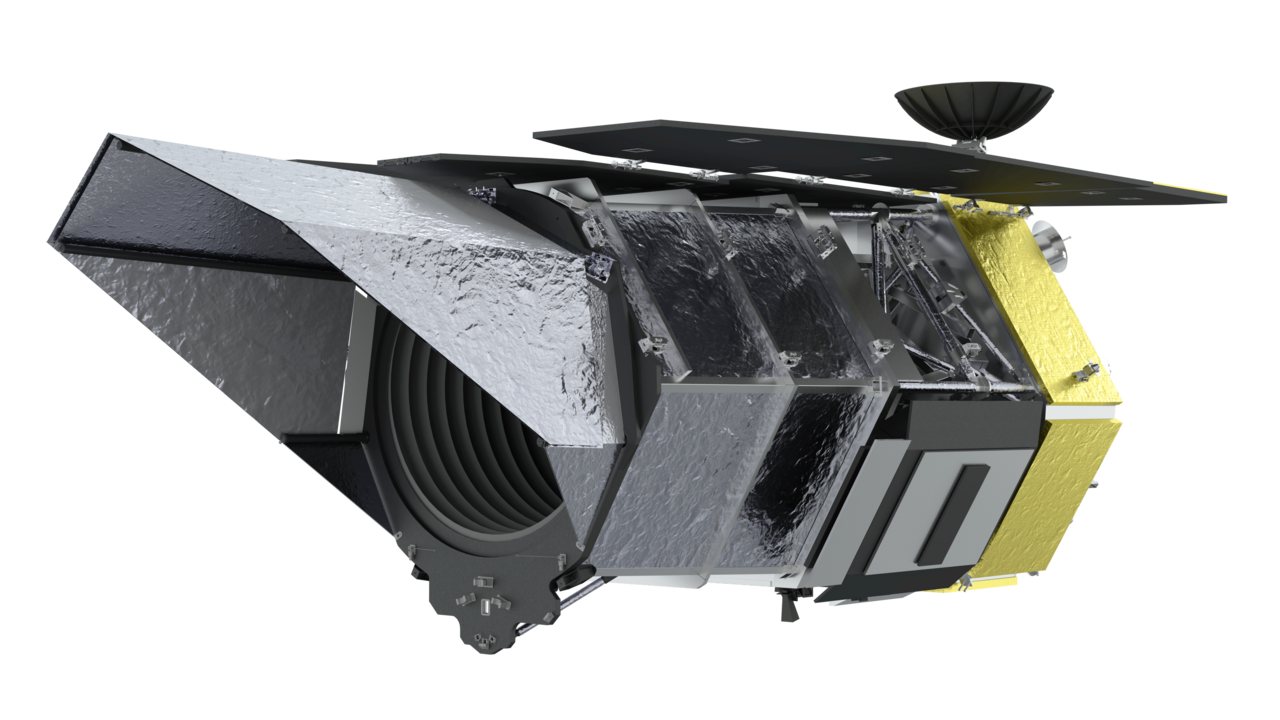
NASA’s newest space observatory, the Roman Space Telescope, is ready to begin its mission to explore some of the deepest questions in modern astrophysics, including the nature of dark energy and the prevalence of exoplanets beyond our solar system. The telescope, named in honor of Nancy Grace Roman, the agency’s first chief of astronomy, is currently encapsulated in the payload fairing at the Kennedy Space Center in Florida, where it was photographed on August 21, 2026, ahead of its planned launch.
The Roman telescope is designed to capture wide-field infrared images of the cosmos, offering a field of view significantly larger than that of the Hubble Space Telescope. This capability will allow scientists to map the distribution of dark matter, measure the expansion history of the universe, and identify thousands of new exoplanets using microlensing techniques. The mission is expected to provide critical data that could help refine theoretical models of cosmic evolution and the forces driving the universe’s accelerated expansion.
Dark energy, which is believed to make up roughly 68 percent of the universe, remains one of the most puzzling phenomena in physics. Roman’s surveys will observe distant supernovae and the large-scale clustering of galaxies to trace how dark energy has influenced cosmic expansion over billions of years. By comparing these observations with theoretical predictions, researchers hope to determine whether dark energy is a constant force or something that changes over time.
In addition to its cosmological objectives, Roman will conduct a comprehensive census of exoplanets, including free-floating worlds that do not orbit a star. The telescope’s microlensing survey will detect planets by measuring the slight gravitational bending of light from background stars, a method that is particularly sensitive to planets located farther from their host stars than those typically found by other observatories. This approach complements the work of missions such as Kepler and TESS, which focus on planets in close orbits.
The Roman mission is a collaborative effort between NASA, the Goddard Space Flight Center, the Jet Propulsion Laboratory, and several academic and research institutions. The telescope’s primary instrument, the Wide Field Instrument, is equipped with a 288-megapixel infrared camera that will enable rapid, high-resolution surveys of the sky. A second instrument, the Coronagraph Instrument, is designed to block starlight and directly image giant exoplanets, offering a glimpse into their atmospheres and compositions.
Once in orbit, Roman will operate from a vantage point at the Sun-Earth Lagrange point 2, about 1.5 million kilometers from Earth, where it will maintain a stable position relative to both bodies. From this location, the telescope will be able to observe large portions of the sky without interference from Earth’s atmosphere or thermal radiation. The mission is planned to last at least five years, with the potential for extension depending on the health of the spacecraft and instruments.
The launch of Roman marks a significant milestone in the ongoing effort to understand the universe’s composition and history. Scientists anticipate that the data collected will not only address fundamental questions about dark energy and dark matter but also provide new insights into the formation of planetary systems and the potential for habitable worlds. The mission’s findings are expected to shape the direction of astrophysical research for decades to come.
49